2025 City Nature Challenge CHWP BioBlitz results

Thank you to everyone who participated in the Claremont Hills Wilderness Park BioBlitz this year! Unfortunately, Saturday, whihc would normally be our biggest day, was rained out, but nonetheless during the BioBlitz…

  • 92 observations were made
  • 73 different species were observed
  • 12 observers participated (2 were new iNaturalist users)
  • 5 new species (3 plants and 2 insects) and one new insect family were added to the Biota of the CHWP project (this number might grow or shrink with new IDs)

Here are just a few of the special “first finds” made in the park during the 2025 CNC BioBlitz:

Graceful Bedstraw (Galium porrigens)


Photo by @carolblaney

One of these was Graceful Bedstraw (Galium porrigens), which was most recently documented in 1971. Galium species are called “Bedstraw” because their fine hook-like hairs that cling to each other so the plants don’t mat down easily when used as a mattress.

Menzies’ Baby Blue Eyes (Nemophila menziesii)


Photo by @nvhamlett

This charming plant is frequently included native wildflower mixes. It was last documented in the CHWP in 1963.

Pacific Sanicle (Sanicula crassicaulis)
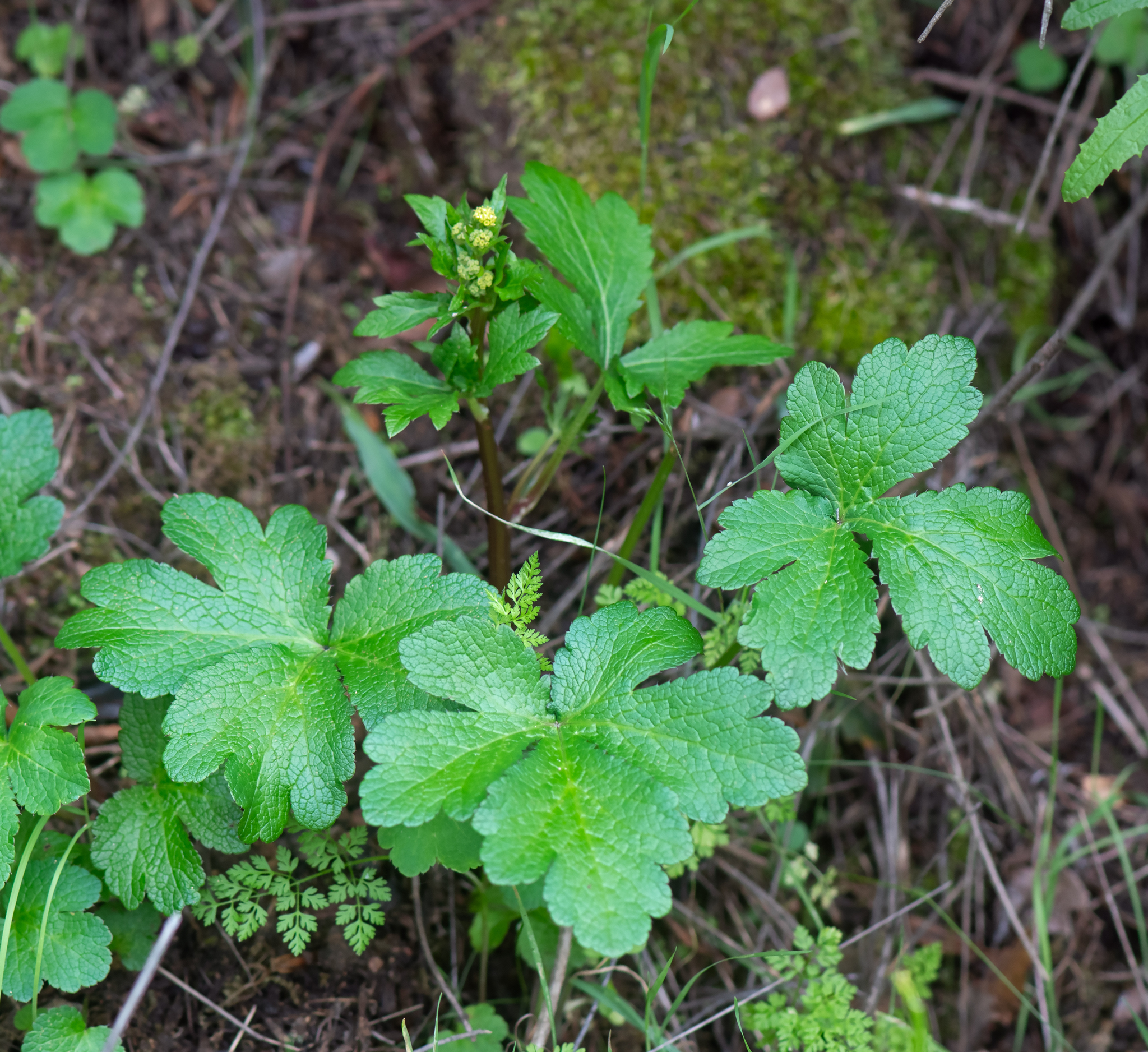

Photo by @nvhamlett

Pacific Sanicle had never previously been documented in the CHWP. The species name, Sanicula, is the dimnutive of the Latin sanare, “to heal”, and native peoples did use this plant for medicinal purposes, including using a poultice of the leaves to treat rattlesnake bites and other wounds. The alternative common name “Snakeroot” probably refers to this use.

Alfalfa Looper (Autographa californica)
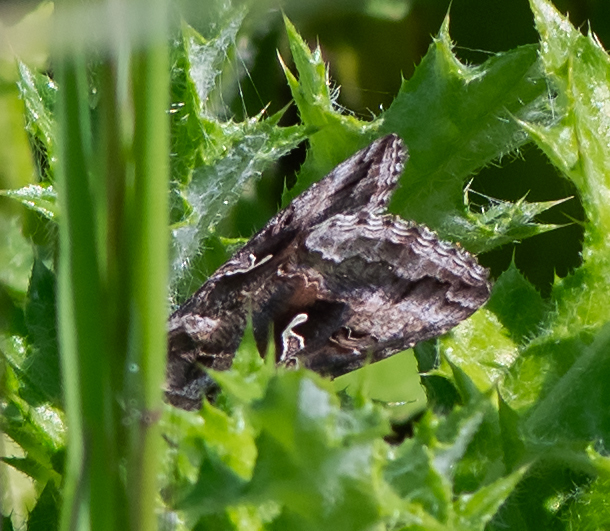

Photo by @nvhamlett

Loopers are so called for the way the caterpillars arch their backs as they crawl along in a looping manor. The caterpillars can cause damage not only to alfalfa, but also peas, sugar beets, beans, mint, and spinach. In most cases, control is needed only where insecticides applied for other pests have reduced natural enemy populations.

If you’re curious, you can see all of the BioBlitz observations here.

These observations are a big help to park managers at the city of Claremont, who use such data to make decisions about endangered species and invasive ones. For those of us fascinated by diversity, seeing these new species is also great fun and great learning.

Many, many thanks to @nvhamlett, @carolblaney, @keirmorse, @kwnaturalist, @alexiam068, @jeremyflores, @mskeschner, @moonlightrunner, @stephnjamie, @csuen, @scottmarnoy, @tonyjeremy4140 for contributing observations and making the BioBlitz a big success!

The results of the City Nature Challenge CHWP BioBlitz are in!

On Saturday, April 30, the Friends of the Wilderness Park held a BioBlitz in the Claremont Hills Wilderness Park as part of the City Nature Challenge. (If you don’t know what a BioBlitz is, please check out our previous post.)

The City Nature Challenge official identification period is now over, and we are excited to report our results.  (Although if you have observations you haven’t posted yet from the BioBlitz, don’t worry, they will still be counted.)

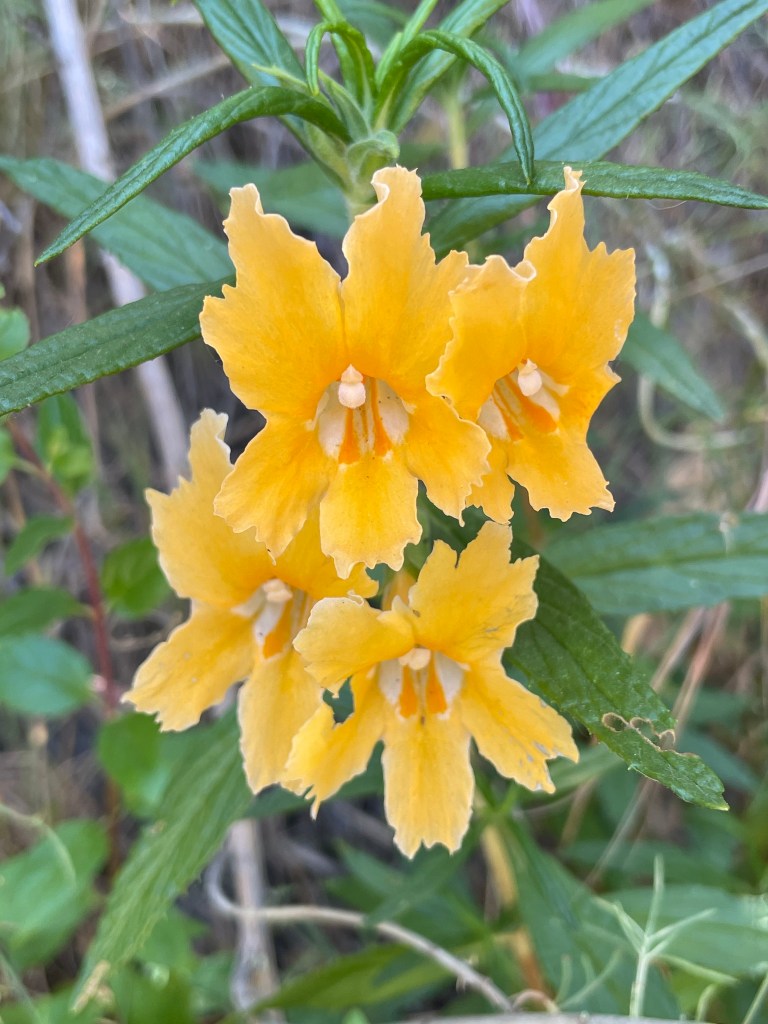
Southern Bush Monkeyflower (Diplacus longiflorus). Observation by ©Vicki Salazar.

Overall results

Eight observers made 197 observations of 95 different species during the BioBlitz.  Eighty percent of the observations reached “Research Grade”, which means that the iNaturalist community agreed on species-level ID, with more than 2/3 of identifiers agreeing on the species ID. You can see all the observations from the BioBlitz by clicking here.

Most observed species

Not surprisingly – since it’s at its showy peak right now – the most observed species was Southern Bush Monkeyflower (Diplacus longiflorus).

New species observed

Most exciting to us was the addition of 14 new taxa to our Biota of the Claremont Hills Wilderness Park project.  They included:

San Luis Blazingstar (Mentzelia micrantha). Observation by ©Carol Blaney.
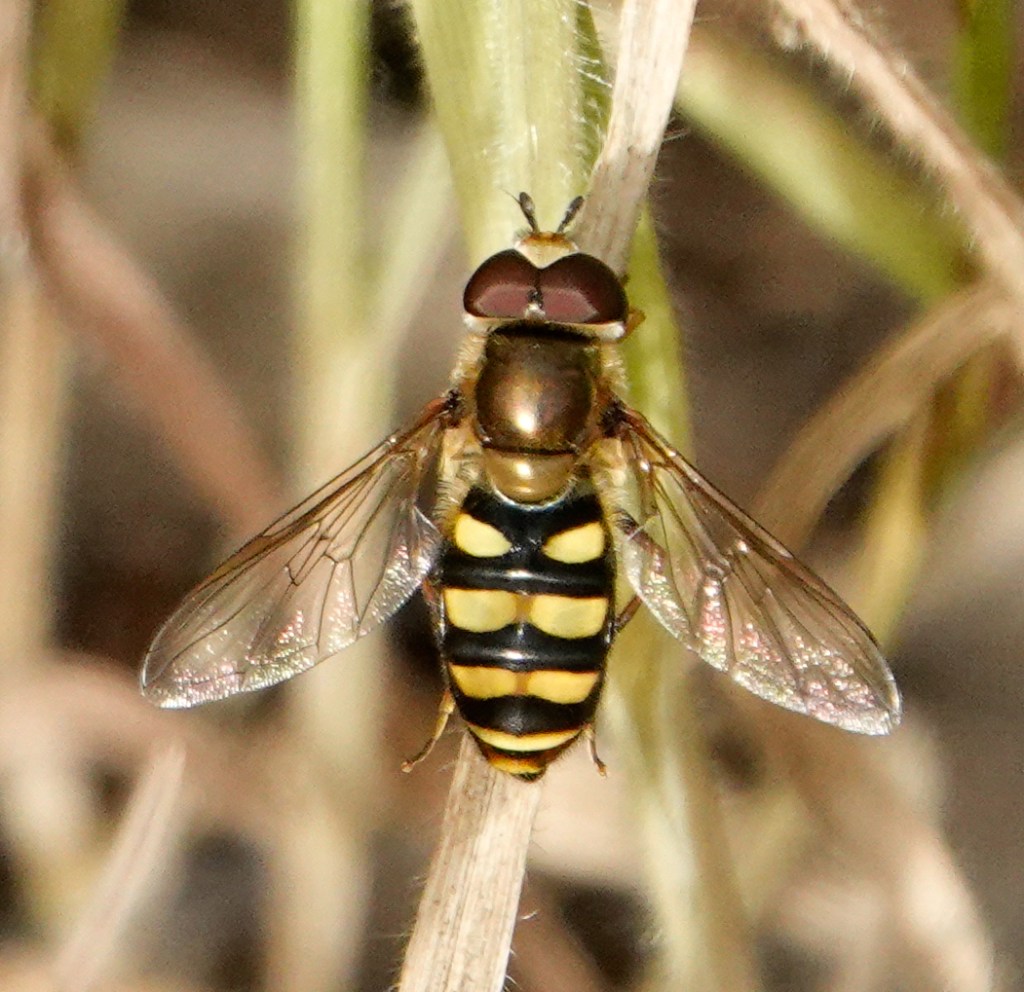
A Western Aphideater (Eupeodes fumipennis) – a syrphid fly. Observation by ©Carol Blaney.
  • Four plant species:
    • Southern California Clematis (Clematis pauciflora)
      This means we have two Clematis species in the Park
    • Pineapple-weed (Matricaria discoidea)
    • San Luis Blazingstar (Mentzelia micrantha)
    • Perennial Ryegrass (Lolium perenne)
      We’re not so excited about this non-native invasive grass, but it’s good to know it’s there
  • Nine insect taxa (1 bug, 4 beetles, a wasp, and 3 flies):
    • Aoplonema – a plant bug
    • Judolia sexspilota – a flower longhorn beetle
    • Ornate Checkered Beetle (Trichodes ornatus)
    • Apsena – a darkling beetle
    • Dichelonyx– a May beetle or Junebug
    • White-headed Bee Fly (Bombylius albicapillus)
    • Euodynerus – a potter wasp
    • Chrysopilus – a snipe fly
    • Western Aphideater (Eupeodes fumipennis)
  • One bird species:
    • Hutton’s Vireo (Vireo huttoni)
      You can listen to it here

Coolest observation

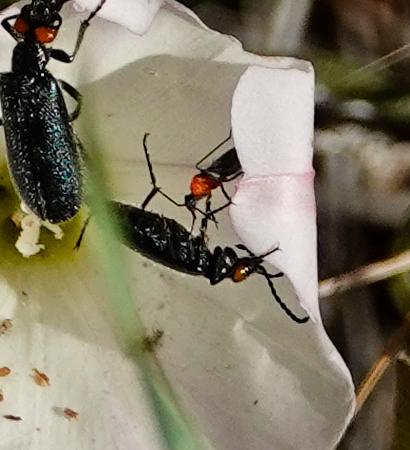
Vegetarian bugs go rogue and try to make a meal of blister beetles!

A mirid plant bug (Aoplonema sp.) attacking a Red-eared Blister Beetle (Lytta auriculata). Observation by ©Carol Blaney.

“Coolest” is, of course, subjective, but our pick is Carol Blaney’s observation of a pair of mirid plant bugs (Aoplonema sp.) attacking two mating Red-eared Blister Beetles (Lytta auriculata).  As she describes the encounter, “The Aoplonema pair advanced on the mating Lyttas. One mirid repeatedly probed the tarsal claws of the female, which she twisted away to avoid, as best she could while mating. The other probed the underside of the male Lytta (as shown in this photo).

What made this encounter strange is that the attacking bugs were mirids = plant bugs.  Aren’t they supposed to eat plants?  What were they doing going after blister beetles? A tip from identifier K. Schneider pointed us to the answer.

It turns out that some mirids are predatory and eat other insects, and that Aoplonema are particularly attracted to blister beetles.  These aptly named beetles secrete a compound, cantharidin, which causes severe blistering on the skin and is poisonous when ingested. Cantharidin is generally a defense against predators, and blister beetles coat their eggs with it to deter predators. Paradoxically, cantharidin is an attractant to Aoplonema. They use it to home in on blister beetles and then proceed to insect their mouth parts membranous regions between segments of the blister beetles’ hard exoskeletons to suck out their hemolymph.  Yikes!  It truly is a dog-eat-dog – or in this case a bug-eat-beetle – world out there!

The link to the observation with all the fascinating comments is: https://www.inaturalist.org/observations/114324027.

Many thanks to:

  • All the folks who staffed our booth – Vicki Salazar, Meg Mathias, Scott Marnoy, Diego Tamayo, Glen Morrison, Drew Ready, and Nancy Hamlett.
  • All the observers who contributed their sightings – Carol Blaney, Dave Bedell, Donna Bedell, Vicki Salazar, Carson Barry, Mark Coast, Laura Roach, and Nancy Hamlett
  • All 43 identifiers!

Question of the Day: Why did the tarantula cross the road?

If you’ve been to the Wilderness Park recently, you may have spotted tarantulas out on the fire trails, and you might well wonder:

Why are so many tarantulas out now?
Why are they crossing the roads?

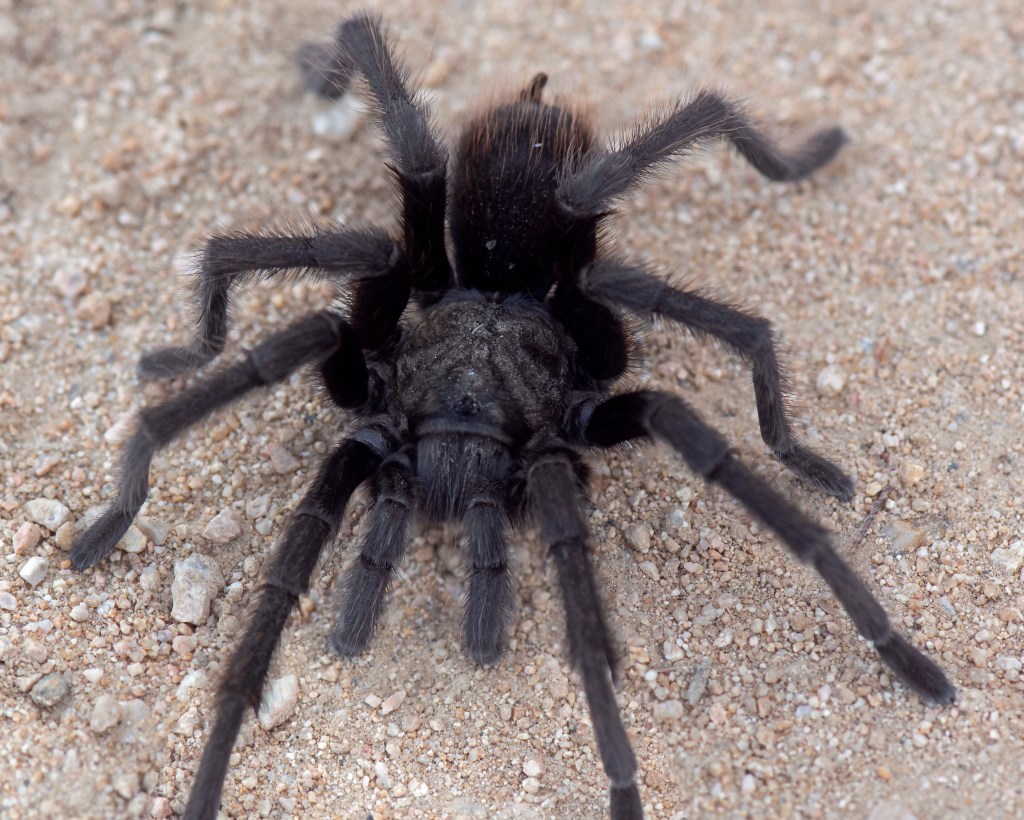
The tarantulas you see out on the roads this time of year are all adult males, and they are out looking for females. They really have only one thing on their little tarantula minds, and they are pretty oblivious to anything else.

A male California Ebony Tarantula (Aphonopelma eutylenum) crossing Johnson’s Pasture Rd in the Wilderness Park. On the front legs you can see the tibial hooks or spurs that are used to grasp the female during mating. ©Nancy Hamlett.


The females are found in burrows that are scattered across the landscape, and the males search for them by alternating between walking in straight lines and walking in concentric circles until a female’s scent is detected, suggesting that a burrow is nearby. The males may travel as much as 3/4 of a mile looking for a mate, and if a road is in their path, they just trundle on across it.

Once a male has found a female’s burrow, he signals his presence by doing some fancy drumming on the ground at the burrow’s entrance. If the female likes his drumming, she will emerge from her burrow, and mating can commence. The male uses special hooks on its front legs (which you can see in photo above) to immobilize the female’s fangs and position her during mating.

Autumn is the mating season for tarantulas, so that’s when you’ll most likely spot the males out on their mating missions. If we look at the distribution of tarantula sightings reported on our iNaturalist project, you can see that over 80% of the observations were made in August – November.

Tarantula observations in the Wilderness Park by month. Nineteen of 23 iNaturalist observations (83%) were made in August – November.

It’s not clear exactly how many tarantula species reside in the Wilderness Park. Only one species – California Ebony Tarantula (Aphonopelma eutylenum) – has iNaturalist observations labeled as “Research Grade”, meaning that the identification has been confirmed by a consensus of other identifiers. Steindacher’s Ebony Tarantula (Aphonopelma steindachneri) has also been reported, but the identifications have not been confirmed.

Different Aphonopelma species look very similar and can be extremely difficult to distinguish without molecular data (see Hamilton et al., 2016), so we may never know whether one or two species are present in the Park. You can see all the reported iNaturalist observations of tarantulas in the Park here.

If you’d like to find out more about the tarantula’s life cycle, check out Ralph Washington, Jr.’s article in Bay Nature magazine.

California Biodiversity “Day” in the Wilderness Park

Thanks to everyone who participated in California Biodiversity Day at the Wilderness Park on September 11, and thanks to the Park Rangers, who set up their canopy for us! During the official California Biodiversity Days, Sept. 4 – 12, seventeen new observations were reported to our iNaturalist project, including 14 taxa, of which 11 were identified to species.

Here are a few that were observed:

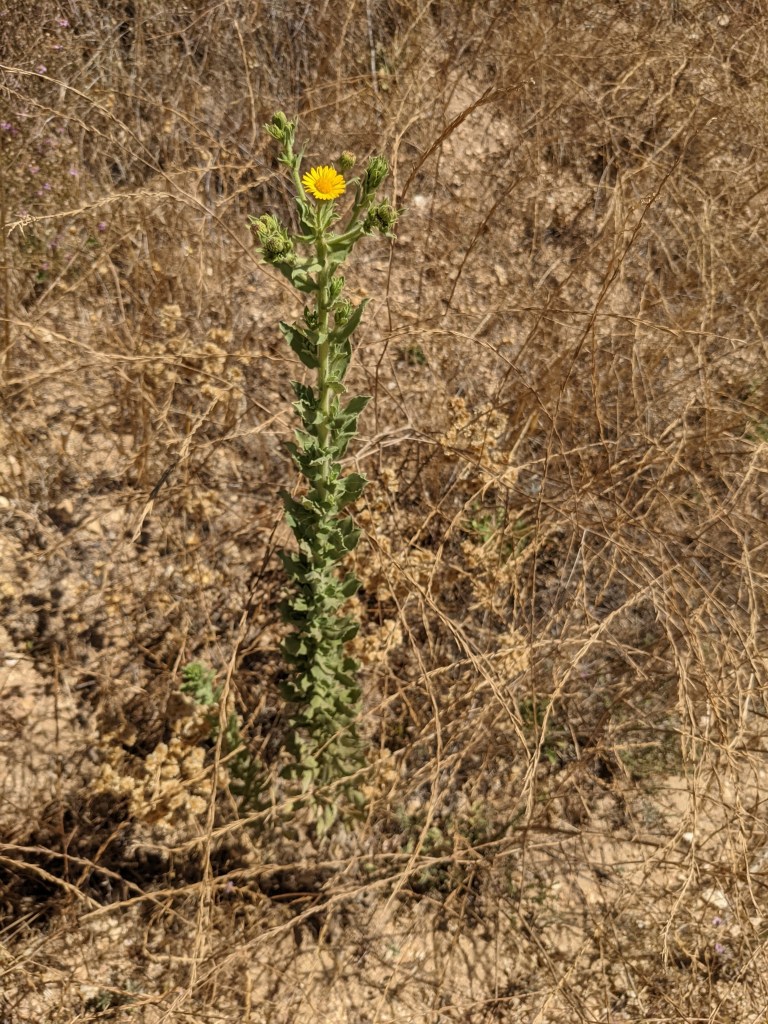
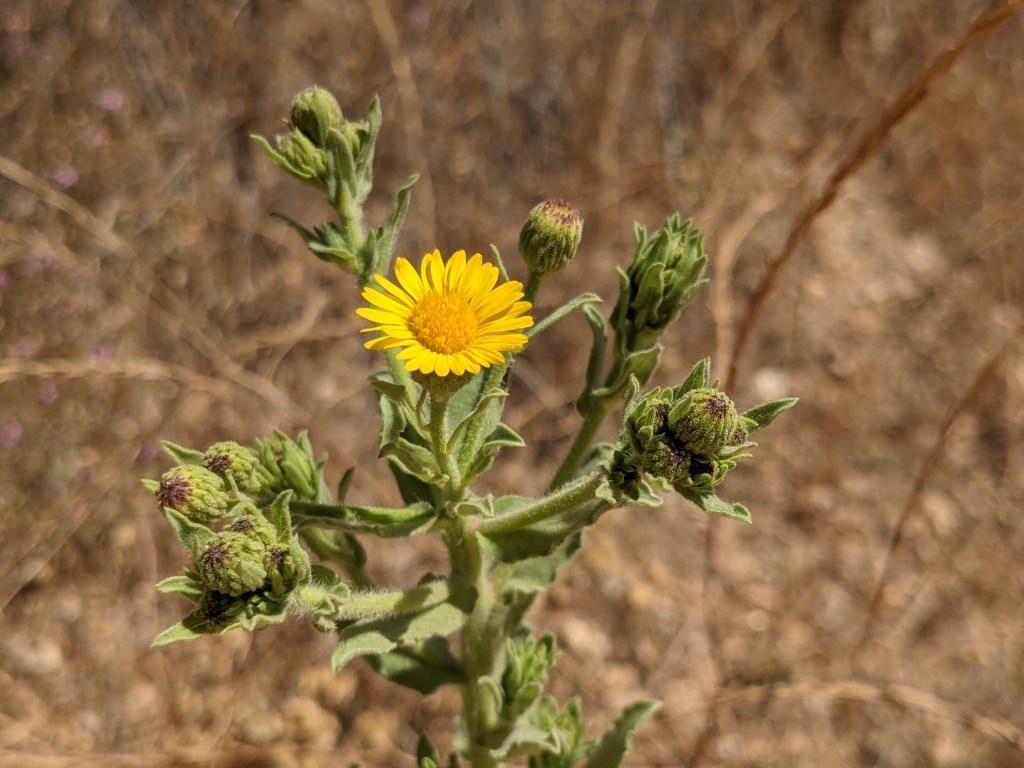
Telegraph Weed (Heterotheca grandiflora)

Telegraph Weed growing up Johnson’s Pasture Road on the “loop”. © Peri Lee · some rights reserved
Telegraph Weed – flower detail. © Peri Lee · some rights reserved

Telegraph Weed was the species most commonly reported in the Park during California Biodiversity Days. Its bright yellow flowers on tall stems (sometimes more than 5 ft) are a common sight in the Park in late summer and fall. It is a pioneer native species, growing along roadsides and in other disturbed sites.

The origin of the common name is hazy. Some think it’s because the tall, slim stalks stick up like telegraph poles. Others have suggested it’s because it readily colonized the areas disturbed by telegraph pole installation.

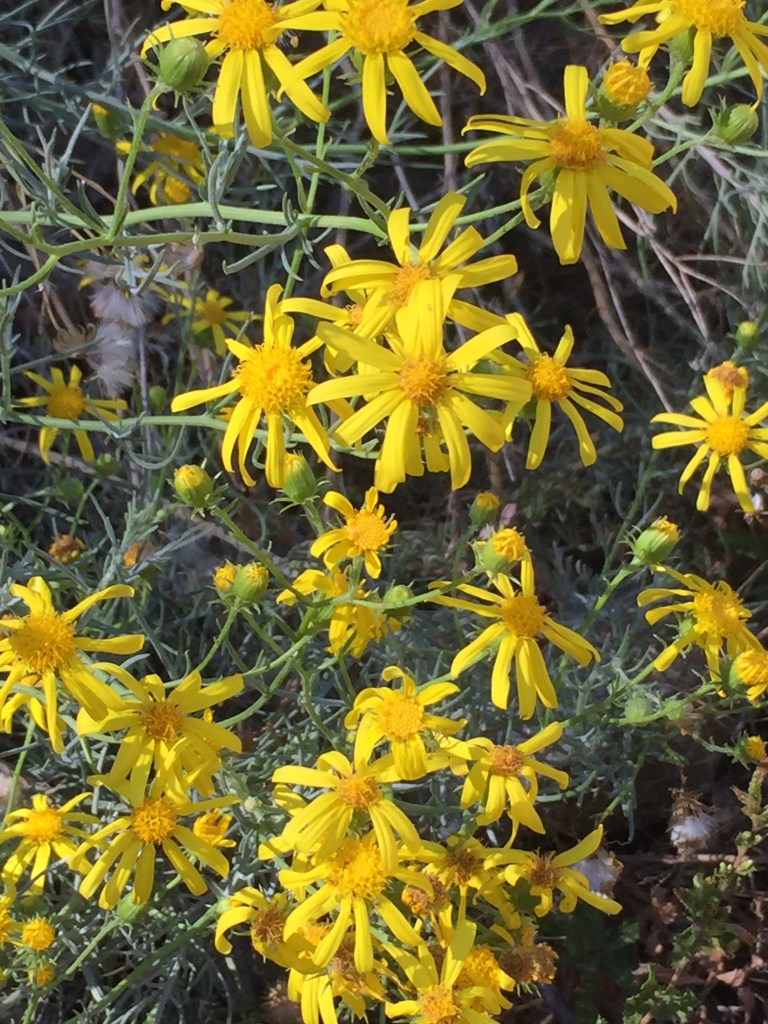
Threadleaf Groundsel (Senecio flaccidus)

Threadleaf Groundsel next to Palmer-Evey Mountainway. © travisbbotany · some rights reserved

Another late summer and fall bloomer, Threadleaf Groundsel’s bright yellow daisy-like flowers rise about the mass of pale gray-green threadlike leaves that give the shrub its common name. Many different bees like to visit Threadleaf Groundsel.

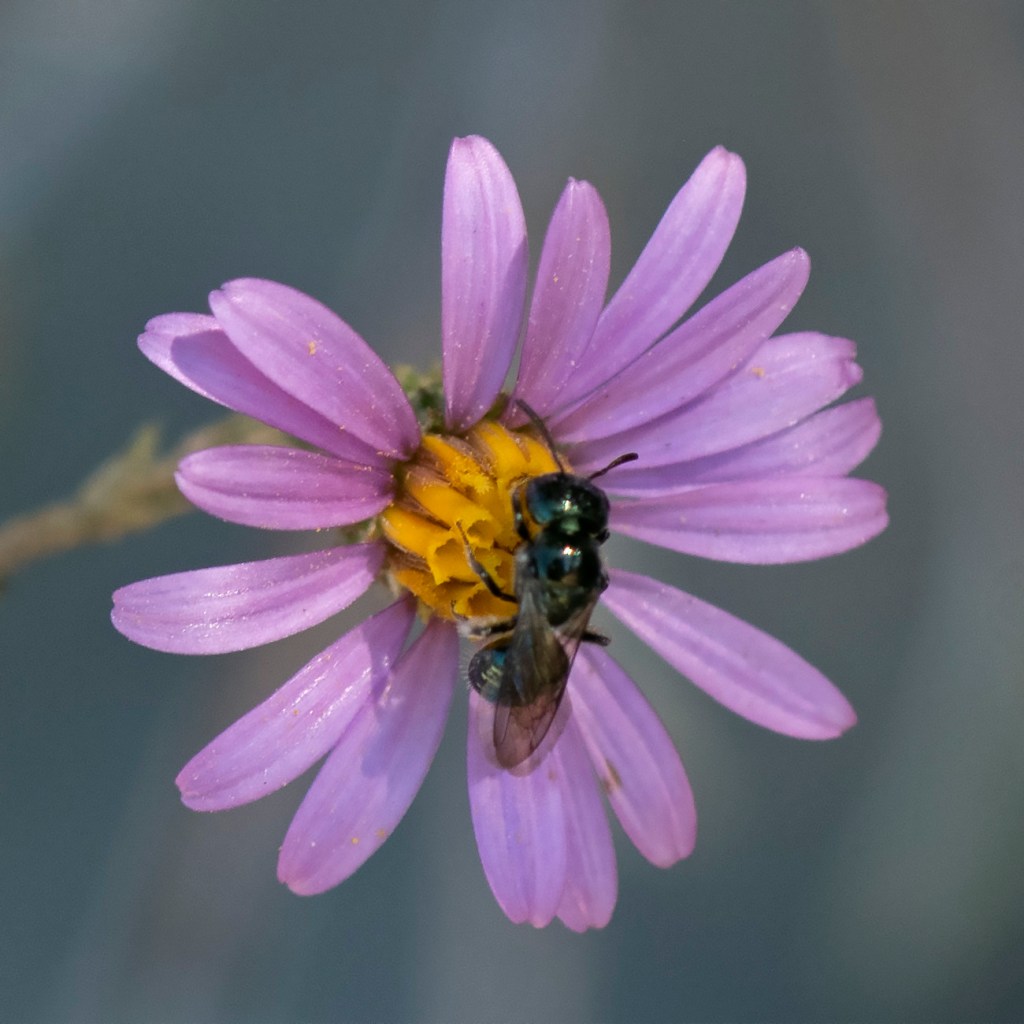
Small Carpenter Bee (Ceratina sp.)

A Small Carpenter Bee on California Aster (Corethrogyne filaginifolia) next to the Cobal Canyon Trail.
© Nancy Hamlett · some rights reserved

Small Carpenter Bees are related to the large carpenter bees you may have seen around your house, but they are much too small to be able to bore into wood to make their nests; instead they make their nests in the pithy stems of plants.

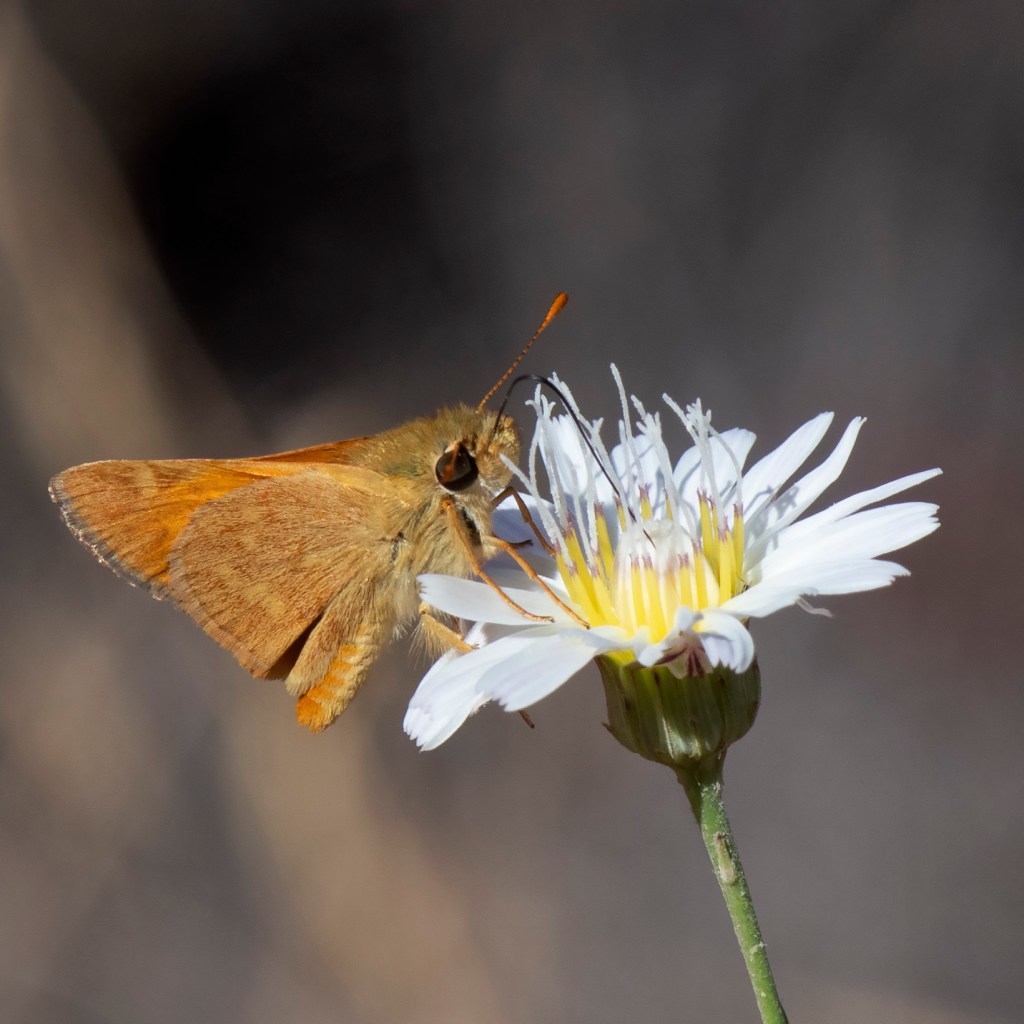
Woodland Skipper (Ochlodes sylvanoides)

A Woodland Skipper nectaring on Cliff Aster (Malacothrix saxatilis) next to the Cobal Canyon Trail.
© Nancy Hamlett · some rights reserved

Woodland Skippers are common in chaparral in the late summer and fall. The larval host plants are grasses, but the adults nectar on a wide variety of plants.

You can see all of the Biodiversity Day observations here.

Celebrate California Biodiversity Day in the Park September 11

September 7, 2021 marks the third official celebration of California Biodiversity Day, an annual event created in 2018 to celebrate the state’s exceptional biodiversity and encourage actions to protect it.  This year organizations throughout the state are hosting California Biodiversity Day events from September 4 to September 12, 2021, and the City of Claremont Park Rangers together with the Friends of the Wilderness Park be celebrating in the Claremont Hills Wilderness Park on the morning of Saturday, September 11.

Join us on Saturday morning, September 11th and learn how to use your phone to record observations of Wilderness Park flora and fauna with iNaturalist!  Just look for the canopy near the North Mills entrance for more information! All iNaturalist observations made in California from September 4 – September 12 will automatically be added to the California Biodiversity Day 2021 iNaturalist project.

Already an iNaturalist user?

Please come and help show others to use the iNaturalist app! Contact Vicki Salazar, our Volunteer Coordinator, at vickisalazar01@gmail.com, to let her know when you will be able to come. (Please note that all Friends of the Wilderness Park volunteers are required to be fully vaccinated for COVID-19.)

New to iNaturalist?

iNaturalist is an online social network of people sharing biodiversity information to help each other learn about nature. iNaturalist is a collaboration between National Geographic and the California Academy of Sciences.  Anyone can participate in iNaturalist!

Before arriving on Saturday please:

  1. Go to iNaturalist.org and create a free account. You should see “SIGN UP” featured prominently on the homepage.   Otherwise, there’s a “Sign Up” link in the top right corner.
  2. On your smart phone, go to the Apple Store or the Google Play store and download the iNaturalist app.

Once you’ve signed up, you can enter observations from either your phone or computer.  The iNaturalist site has a really good explanation here:

https://www.inaturalist.org/pages/getting+started
The page also has links to video tutorials.

In addition, we have two printer-friendly handouts created from the iNaturalist guide:

The Wilderness Park Biota Project:

iNat_project_header

In addition to the “California Biodiversity Day” project, any observations you make in the Wilderness Park (at any time) will be automatically added to the “Biota of the Claremont Hills Wilderness Park” project. This project was created by the Friends of the Wilderness Park specifically for documenting the plants and animals of the Wilderness Park.

If you’d like to check out the CHWP project and see what’s already been reported, just go to:
https://www.inaturalist.org/projects/biota-of-the-claremont-hills-wilderness-park

A few tips for best practices:

  • If feasible, crop your photos to feature the subject, especially if it’s not clear whether the subject is the bird or the tree, for example.
  • Include a little description. For one thing, you can use the description to say what’s the subject.  But you can also note any additional details, interesting behavior, type of habitat, odors, etc. that may not be obvious from the photo.
  • Give the most specific ID you can, even if it’s not to the species level. For instance, “insect”, “snake”, or even “plant” or “animal” is better than just having “unknown”.
  • Give a little info about yourself in your profile – it increases your credibility.