
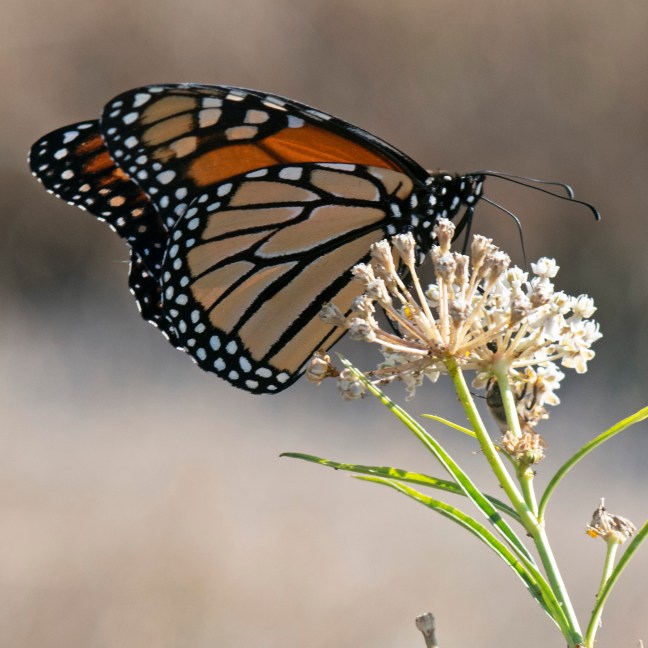
If you’d like to help with Monarch conservation, and you like to take photographs, please consider participating in the upcoming 5th International Annual Monarch Monitoring Blitz!
How does this work and how does it help Monarchs?
From the Media Release:
“For 10 days, the Blitz invites people across North America to look for milkweed plants and survey them for monarch eggs, caterpillars, chrysalises and butterflies. This information will help researchers identify priority areas for monarch conservation actions….
“The yearly snapshots of monarch and milkweed abundance help us better understand the dynamic between the summer generations and their breeding habitat. Since both monarchs and milkweed are found across North America during the time of the Blitz, we absolutely need the public’s help during this special week.”
How can I participate?
- First, go to the Western Monarch Milkweed Mapper website, and register for an account.
- Head out with your camera to look for milkweeds and Monarchs! In the Wilderness Park, all the milkweed plants we are aware of are in the Johnson’s Pasture area, but you might see Monarchs elsewhere.
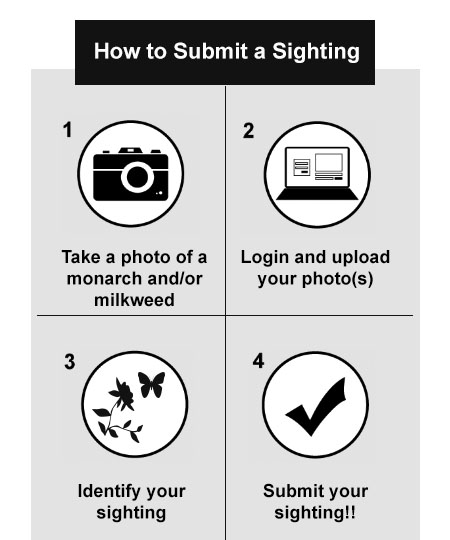
- If you see a Monarch or milkweed, take a photo, login to the Western Monarch Milkweed Mapper website, upload your photo, fill out the form (location, habitat description, stage or Monarch, milkweed species), and submit. That’s it!
Some possibly useful information:
Monarch Identification:
For information about identifying Monarchs and their life stages (egg, larva, pupa, adult), check out this excellent Video on Monarch Identification from the Monarch Joint Venture.
Milkweed Species:
There are only two milkweed species in the Wilderness Park:
-
- Narrowleaf Milkweed (Asclepias fascicularis)
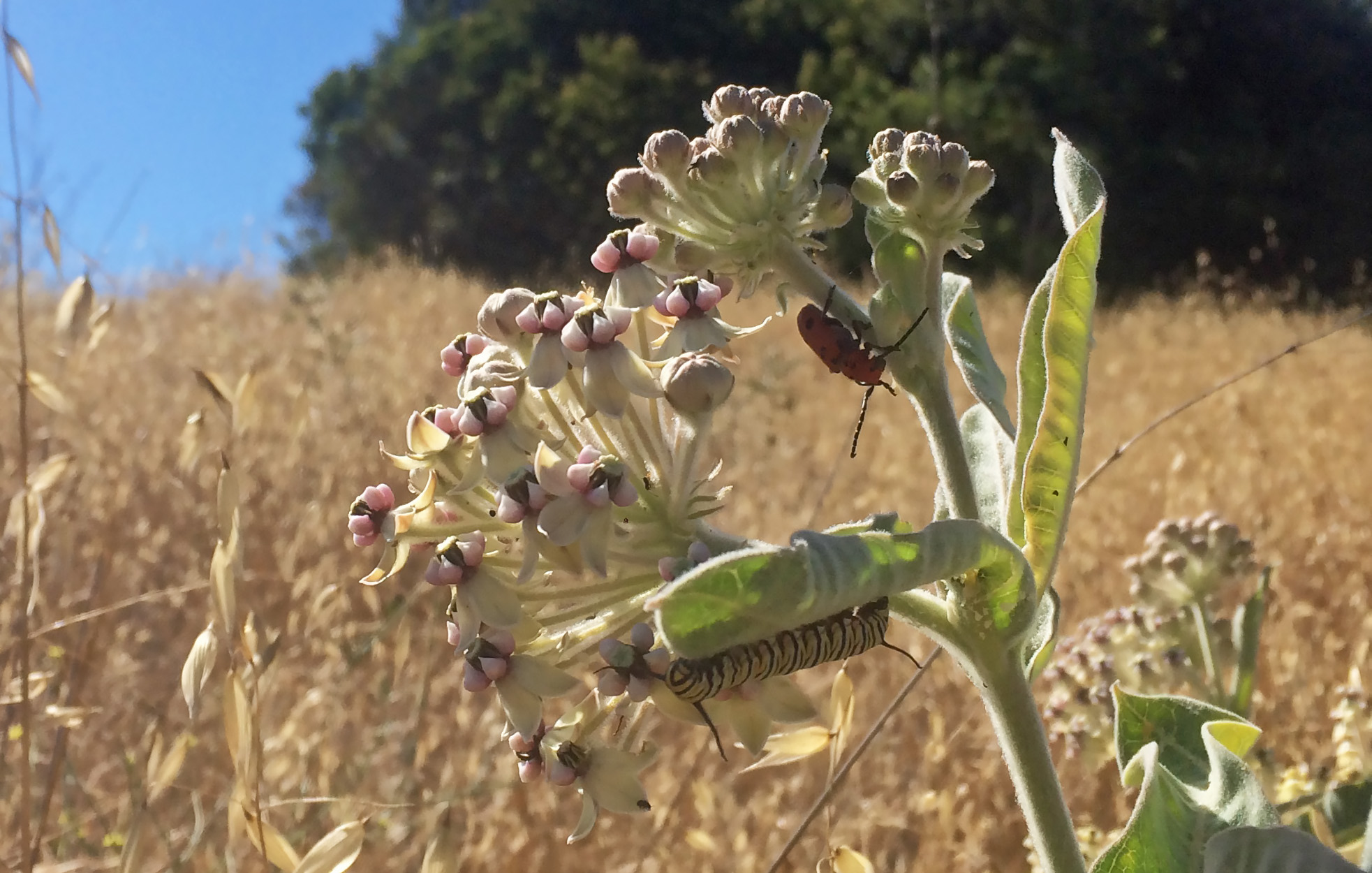
As you might guess from the name, it has narrow leaves, which are green and not fuzzy - Woolypod Milkweed (Asclepias eriocarpa)
This milkweed has very large, fuzzy gray leaves
- Narrowleaf Milkweed (Asclepias fascicularis)
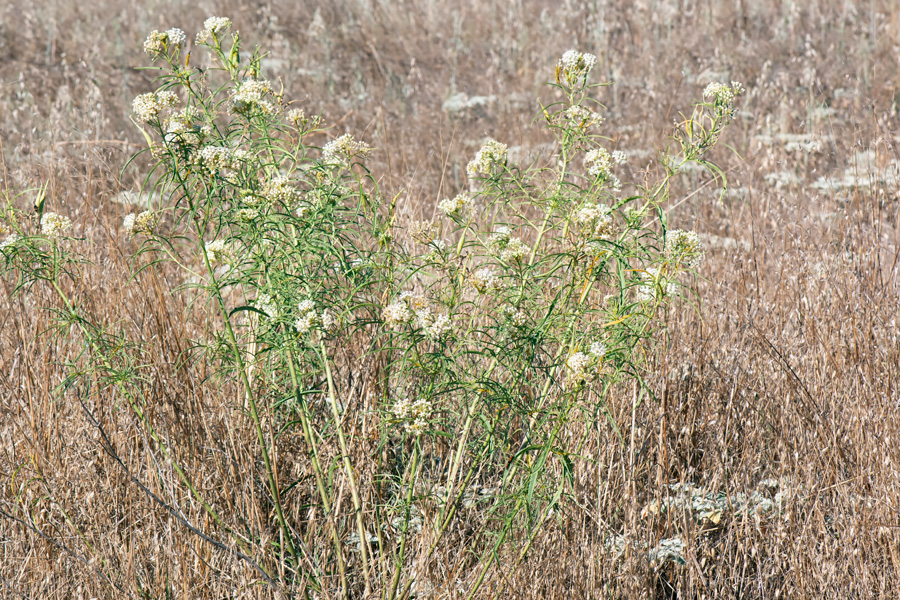
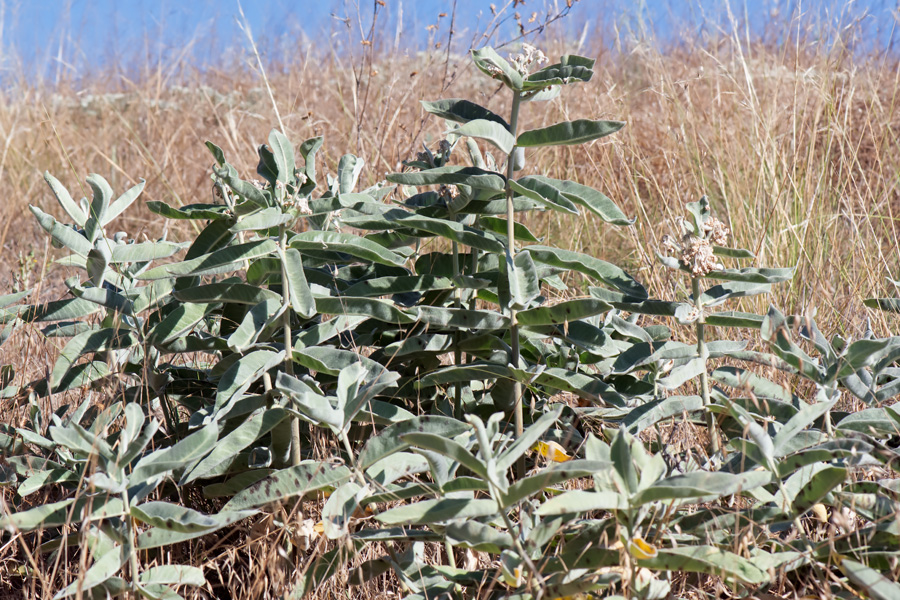
Woollypod Milkweed (Asclepias eriocarpa) in Johnson’s Pasture. ©Nancy Hamlett.
If you have any questions, please contact us at info@friendsofthewildernesspark.org. We will be looking forward to your milkweed and Monarch observations!


 Friends of the Claremont Hills Wilderness Park