2025 City Nature Challenge CHWP BioBlitz results

Thank you to everyone who participated in the Claremont Hills Wilderness Park BioBlitz this year! Unfortunately, Saturday, whihc would normally be our biggest day, was rained out, but nonetheless during the BioBlitz…

  • 92 observations were made
  • 73 different species were observed
  • 12 observers participated (2 were new iNaturalist users)
  • 5 new species (3 plants and 2 insects) and one new insect family were added to the Biota of the CHWP project (this number might grow or shrink with new IDs)

Here are just a few of the special “first finds” made in the park during the 2025 CNC BioBlitz:

Graceful Bedstraw (Galium porrigens)


Photo by @carolblaney

One of these was Graceful Bedstraw (Galium porrigens), which was most recently documented in 1971. Galium species are called “Bedstraw” because their fine hook-like hairs that cling to each other so the plants don’t mat down easily when used as a mattress.

Menzies’ Baby Blue Eyes (Nemophila menziesii)


Photo by @nvhamlett

This charming plant is frequently included native wildflower mixes. It was last documented in the CHWP in 1963.

Pacific Sanicle (Sanicula crassicaulis)
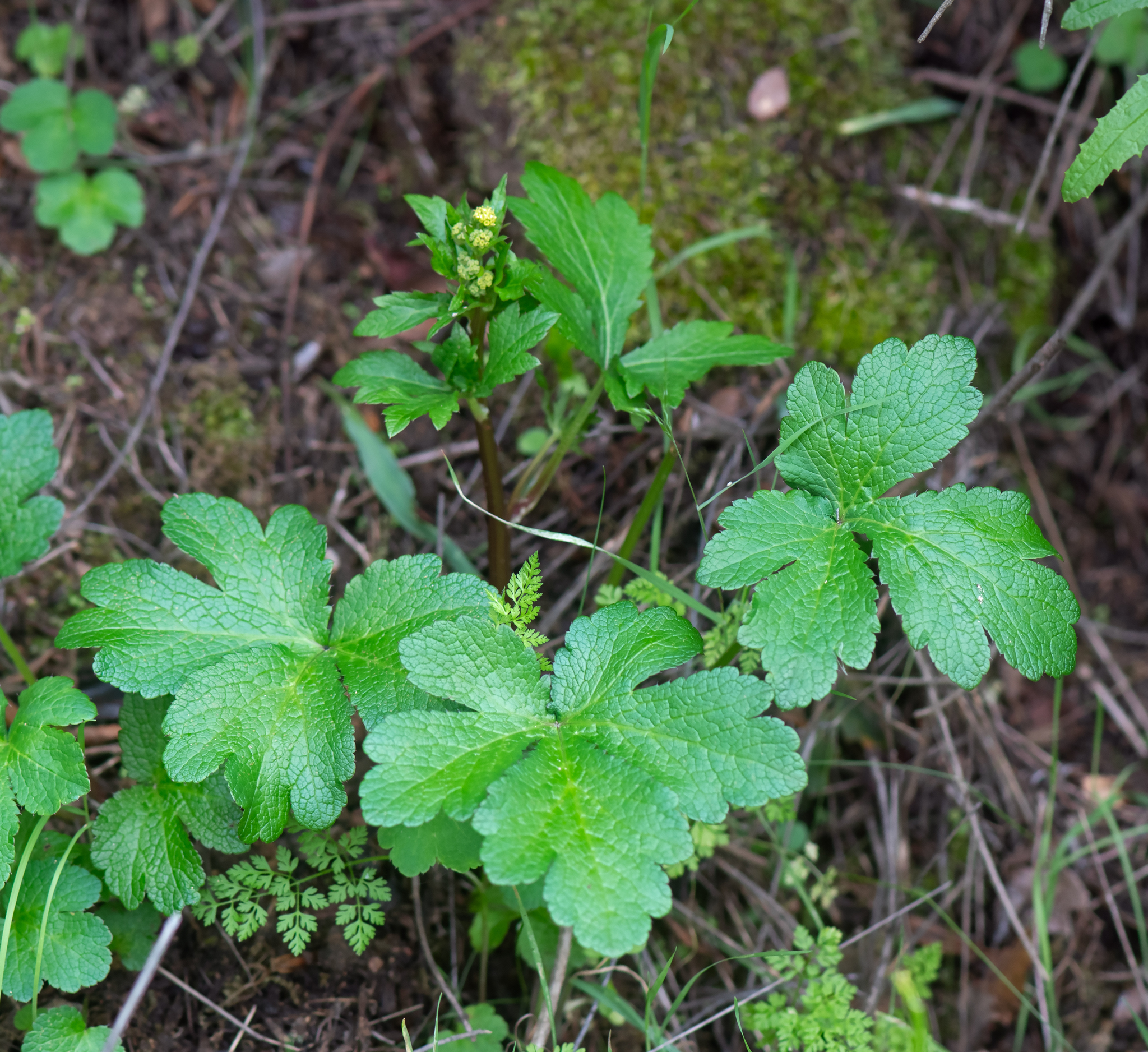

Photo by @nvhamlett

Pacific Sanicle had never previously been documented in the CHWP. The species name, Sanicula, is the dimnutive of the Latin sanare, “to heal”, and native peoples did use this plant for medicinal purposes, including using a poultice of the leaves to treat rattlesnake bites and other wounds. The alternative common name “Snakeroot” probably refers to this use.

Alfalfa Looper (Autographa californica)
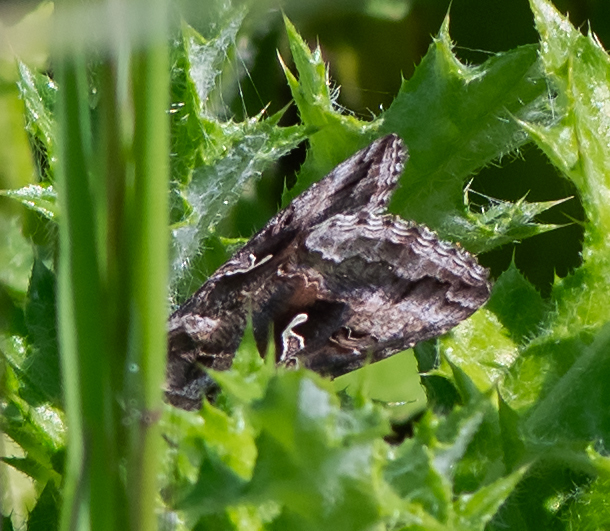

Photo by @nvhamlett

Loopers are so called for the way the caterpillars arch their backs as they crawl along in a looping manor. The caterpillars can cause damage not only to alfalfa, but also peas, sugar beets, beans, mint, and spinach. In most cases, control is needed only where insecticides applied for other pests have reduced natural enemy populations.

If you’re curious, you can see all of the BioBlitz observations here.

These observations are a big help to park managers at the city of Claremont, who use such data to make decisions about endangered species and invasive ones. For those of us fascinated by diversity, seeing these new species is also great fun and great learning.

Many, many thanks to @nvhamlett, @carolblaney, @keirmorse, @kwnaturalist, @alexiam068, @jeremyflores, @mskeschner, @moonlightrunner, @stephnjamie, @csuen, @scottmarnoy, @tonyjeremy4140 for contributing observations and making the BioBlitz a big success!
BioBlitz in the Claremont Hills Wilderness Park – Friday, April 25 – Monday, April 28!

Please join the Friends of the Claremont Hills Wilderness Park Friday, April 25 – Monday, April 28 for a Wilderness Park BioBlitz in conjunction with the City Nature Challenge!

What is a BioBlitz?

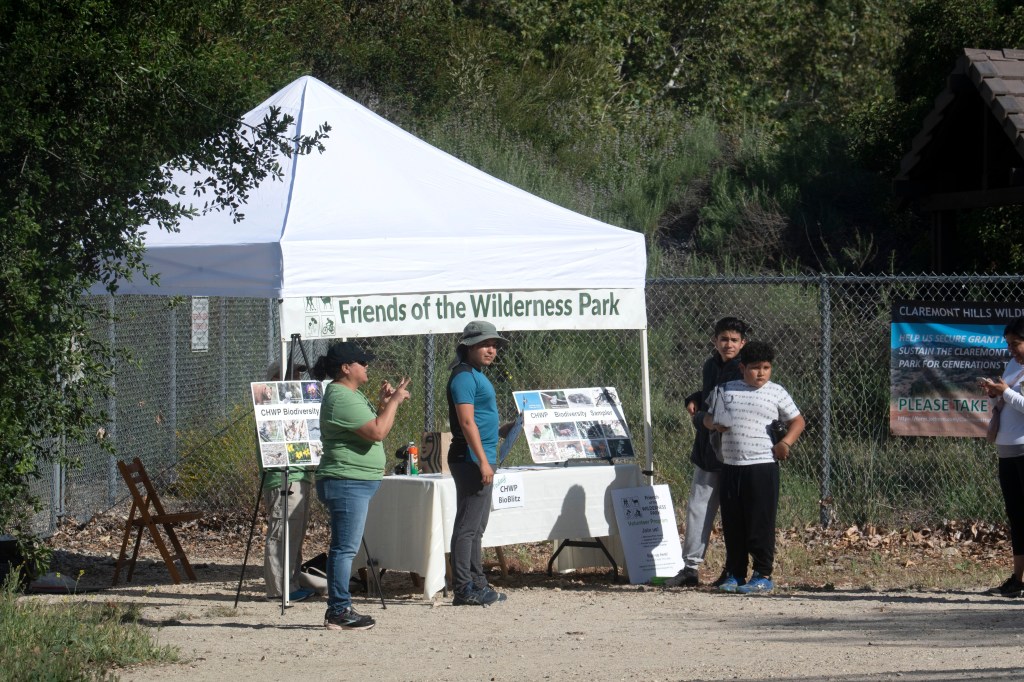
Vicki Salazar and Diego Tamayo at the 2022 City Nature Challenge BioBlitz explaining the BioBlitz to Park visitors. ©Nancy Hamlett.

A BioBlitz is a communal citizen-science effort to record as many species as possible within a designated location and time period.  It’s a great opportunity to meet other naturalists, scientists, and curious members of the public to meet in person in the great outdoors and learn about the plants and animals that live in the Wilderness Park.

How will the BioBlitz work?

Observers will look for plants and animals in the Park, take a photo (or multiple photos) of an organism, and upload the photos to iNaturalist. You can take photos with either your smartphone or a camera.

What is iNaturalist?

iNaturalist is an online social network of people sharing biodiversity information to help each other learn about nature. iNaturalist is a collaboration between National Geographic and the California Academy of Sciences.  Anyone can participate in iNaturalist!

If you’ll be taking photos with your smartphone, do the following before arriving on at the Park please:

  1. Go to iNaturalist.org and create a free account. You should see “SIGN UP” featured prominently on the homepage.   Otherwise, there’s a “Sign Up” link in the top right corner. Once you’ve signed up, you can enter observations from either your phone or computer.
  2. Go to the Apple Store or the Google Play store and download the iNaturalist app. You can then upload your photos to iNaturalist right from your phone. This video shows you how:
How to Make an Observation with the iNaturalist Mobile App from iNaturalist on Vimeo.

If you’ll be taking photos with a camera, you will upload them later through the web interface. This video shows you how:

How to Use iNaturalist’s Photo Uploader from iNaturalist on Vimeo.

Are guides or tutorials available for iNaturalist?

How do I add my observations to the BioBlitz record?

You don’t need to do anything to add your observations to the BioBlitz record.  All observations made in the Park on the BioBlitz day will be automatically collected and added to the City Nature Challenge and Biota of the Wilderness Park projects.

We hope you’ll join us for the BioBlitz!

The City Nature Challenge BioBliz results are in!

Drum roll, please…the 2023 Claremont Hills Wilderness Park BioBlitz results have been tallied!

From April 28–May 1, dedicated iNat observers made 653 observations of 233 species in the park. Especially impressive was that observers captured photos of 58 species not recorded in the park on iNaturalist before. Congratulations and thank you to everyone who participated!!

These observations are a big help to park managers at the city of Claremont, who use such data to make decisions about endangered species and invasive ones. For those of us fascinated by diversity, seeing these new species is also great fun and great learning.

To make the park BioBlitz more available this year, we extended it from one day to four, in conjunction with the annual City Nature Challenge. From April 28–May 1, twenty-seven iNaturalists joined us out on the trails. At least eight observers were using iNaturalist for the very first time. Welcome!

Several experienced iNat users joined us too, gathering at the welcome table hosted by Friends of the Wilderness Park on April 29. It was lovely to meet all the project contributers, many for the first time.

Here are just a few of the special “first finds” made in the park during the 2023 BioBlitz:

Twining snapdragon
(Neogaerrhinum strictum)


Photo by @gabimclean

iNaturalist users @boazsolorio & @gabimclean both captured photos of this lovely purple-flowered plant. The last reported observation of this plant in the park was almost exactly 60 years ago — in May 1963.

Dog Vomit Slime Mold
(Fuligo septica)


Photo by @c_and_h

iNaturalist user @c_and_h spotted this yellowish glop with the most unusual name of Dog Vomit Slime Mold. Despite its unappealing name, the Dog Vomit Slime Mold is a beneficial contributor to the ecosystem, decomposing organic material and making its nutrients available to other organisms. The tough Dog Vomit Slime Mold spores even survived being sent into the stratosphere in a NASA balloon.

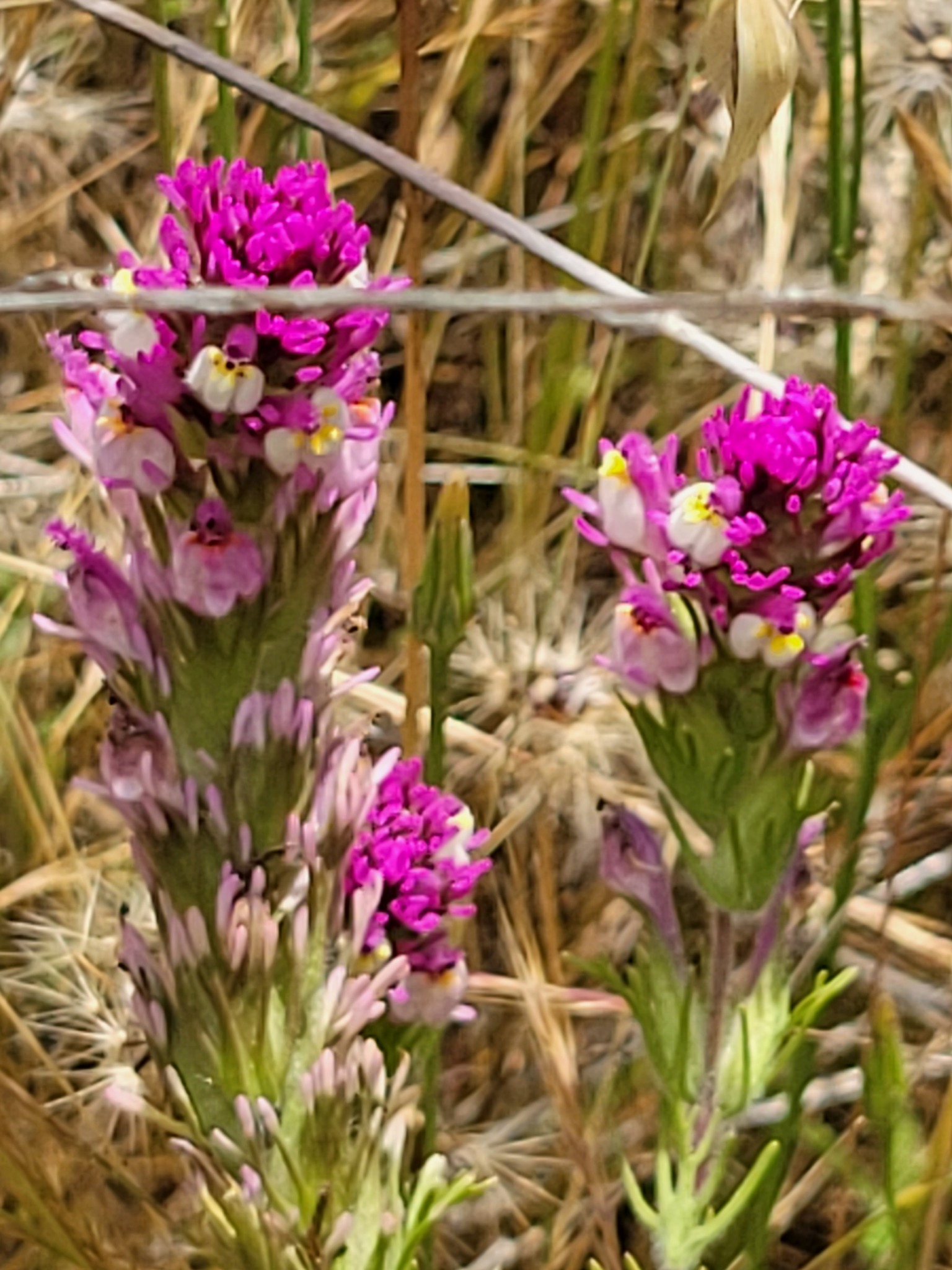
Owl’s Clover
(Castilleja exserta)


Photo by @lynette4nature

iNaturalist user @lynette4nature spotted a nice patch of Purple Owl’s Clover, which has never previously been reported in the park. Purple Owl’s Clover is related to the paintbrushes, and the brushy appearance of the flower cluster leads to its Spanish name, Escobita, which means “little broom”.

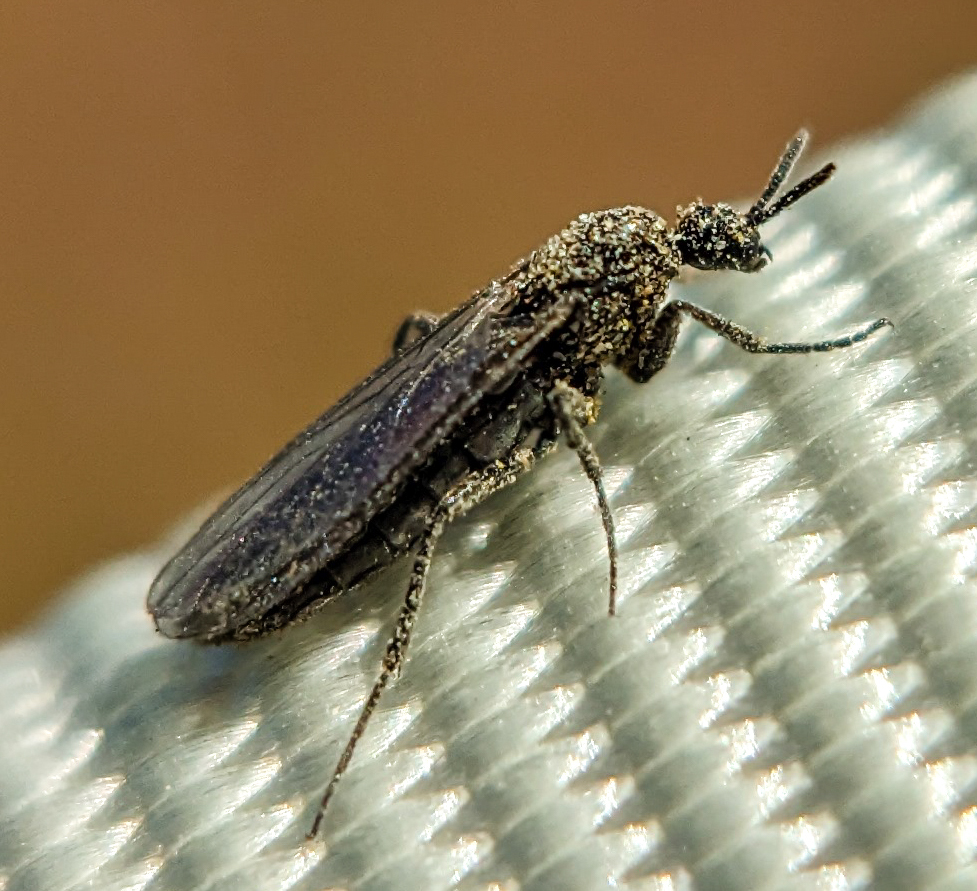
Exiliscelis californiensis


Photo by @carolblaney

Wow! iNaturalist user @carolblaney captured a photo of this fly that flew onto her hat, and it turned out to be only the second observation EVER for all of iNaturalist! Interestingly, this rare fly also appears to be an important pollinator of a rare plant, the endangered Otay Tarplant (Deinandra conjugens).

If you’re curious, you can see all of the BioBlitz observations here!

Many, many thanks to iNaturalist users @boazsolorio, @bee_ecology, @gabimclean, @carolblaney, @lynette4nature, @lunahuitron, @c_and_h, @diego4nature, @nvhamlett, @moonlightrunner, @macciecheese, @eddie154, @jenloren, @rebekaweinstein @somuchseh, @yhrnndz, @chaparralbees, @cicruz, @vmanzo15, @dllemieux, @jasmineq, @samantha1840, @sarahill, @brijorgerebeka, @davesolancesmith, @evie63, @samstan for contributing observations and making the BioBlitz a big success!