
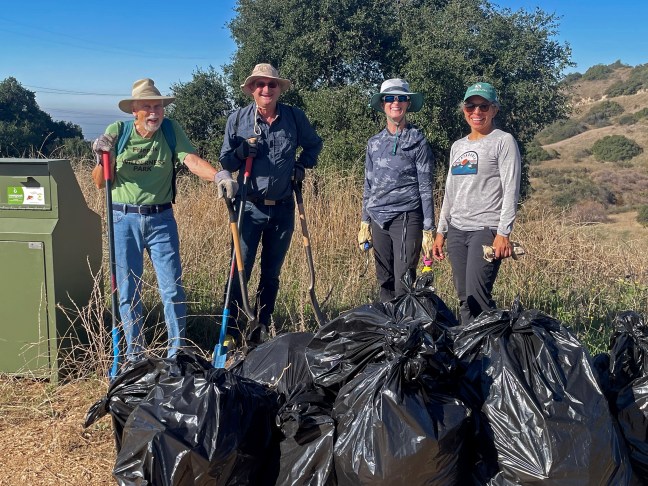
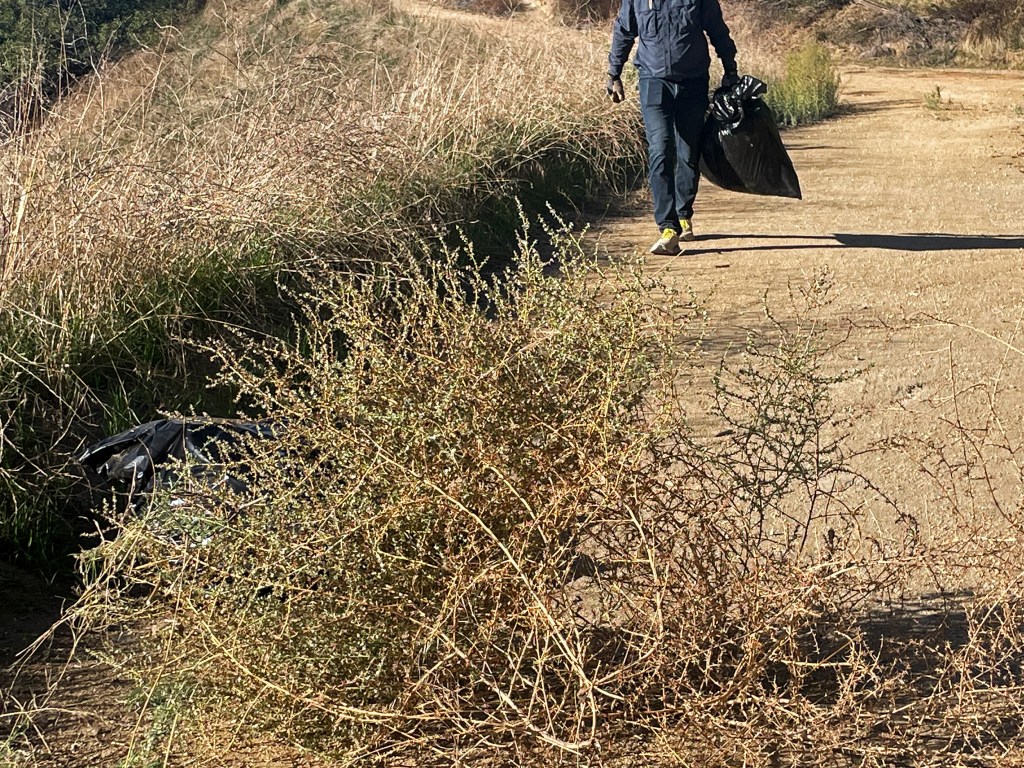
On Saturday, November 1, a group of hard-working weed warriors removed invasive Russian Thistles in Johnson’s Pasture from the sides of Johnson’s Pasture Road, Webb Canyon Road, and a social trail that links the two.
Russian Thistles, which actually aren’t thistles, can be any of several species in the genus Salsola. So far as we know, the ones in Johnson’s Pasture are all Salsola australis, which, as you might guess from the name, came from Australia, not Russia – so they’re neither Russian nor thistles. To be fair, the first Russian Thistles to reach the US were Salsola tragus, which was inadventently introduced into South Dakota around 1874 in flax seed from Russia. And the name Russian Thistle stuck and was applied to all the similar Salsola species.
Starting in late fall Russian Thistles dry out and die, their seeds nestled between prickly dried leaves. Gusts of wind easily break dead them off from their roots. A microscopic layer of cells at the base of the plant — called the abscission layer — makes a clean break possible, and the plants roll away as tumbleweeds, spreading their seeds.
When the rains come, Russian thistle seed germinates very rapidly. Each seed contains a fully formed embryo coiled up inside that uncoils as it germinates. The young taproot extends into the soil within about 12 hours. During this rapid germination period, Russian thistle has an advantage over many other plants under limited moisture conditions. A minimum amount of moisture, lasting only a few hours, will allow germination and root growth to deeper, subsurface moisture.
Large Russian Thistle tumbleweeds can reduce roadway safety by obstructing views along rights-of-ways and causing drivers to swerve their cars to avoid colliding with them. Tumbleweeds accumulating against fences, houses, or natural barriers also pose a fire hazard, and ignited balls of burning Russian thistle blowing through grasslands can spread fire. In the cities of Palmdale and Lancaster, tumbleweeds are such a big problem that Los Angeles County spends $100,000 to $150,000 yearly clearing them.
Fortunately, the Russian Thistle problem is not that big in the Wilderness Park, but we have clearly noticed their numbers increasing, so it’s good to attack them before the situation is dire.
The crew did an outstanding job today, but there’s more of the Park to attack, so we hope you’ll think about joining us for another Russian Thistle removal outing!
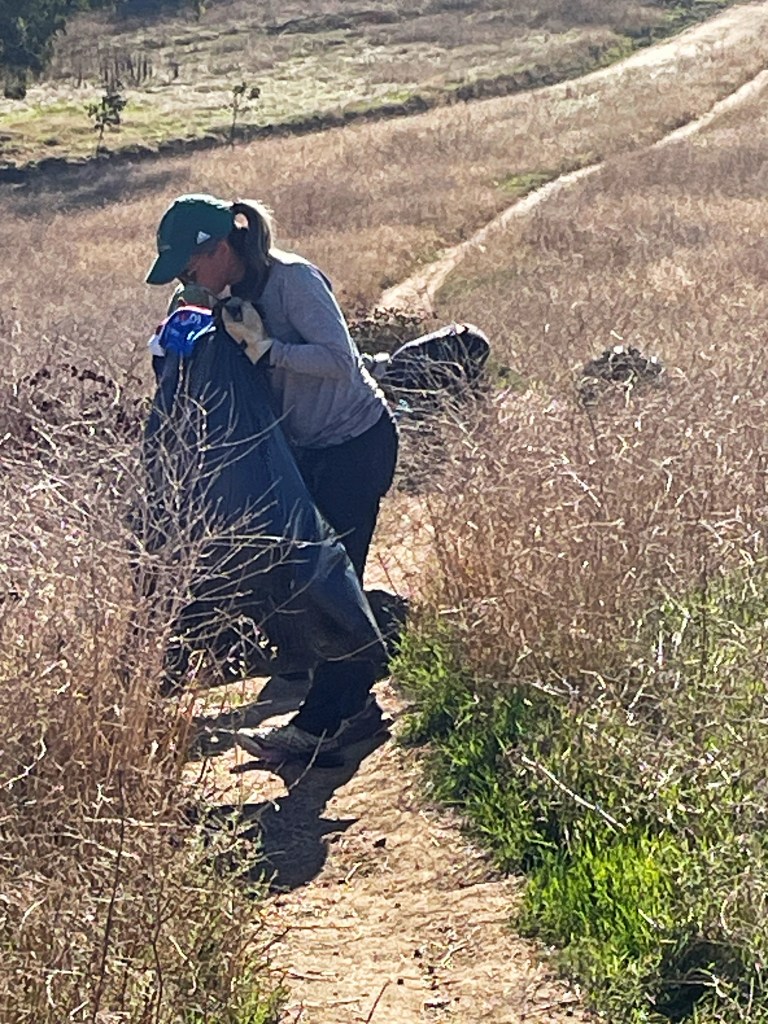
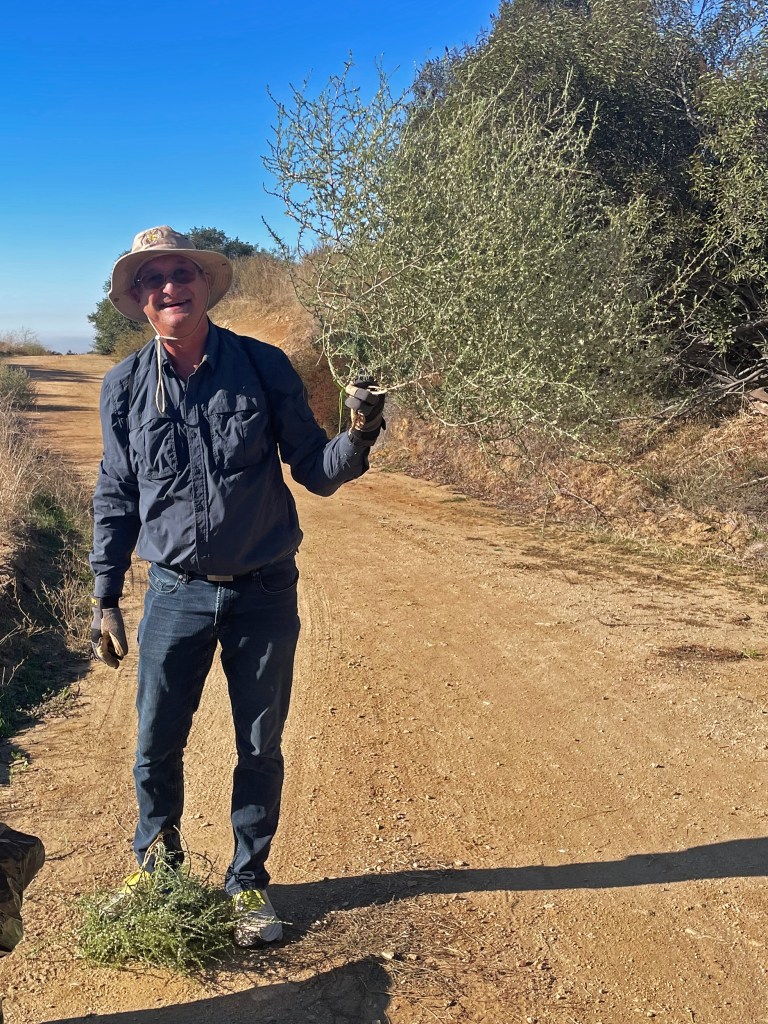
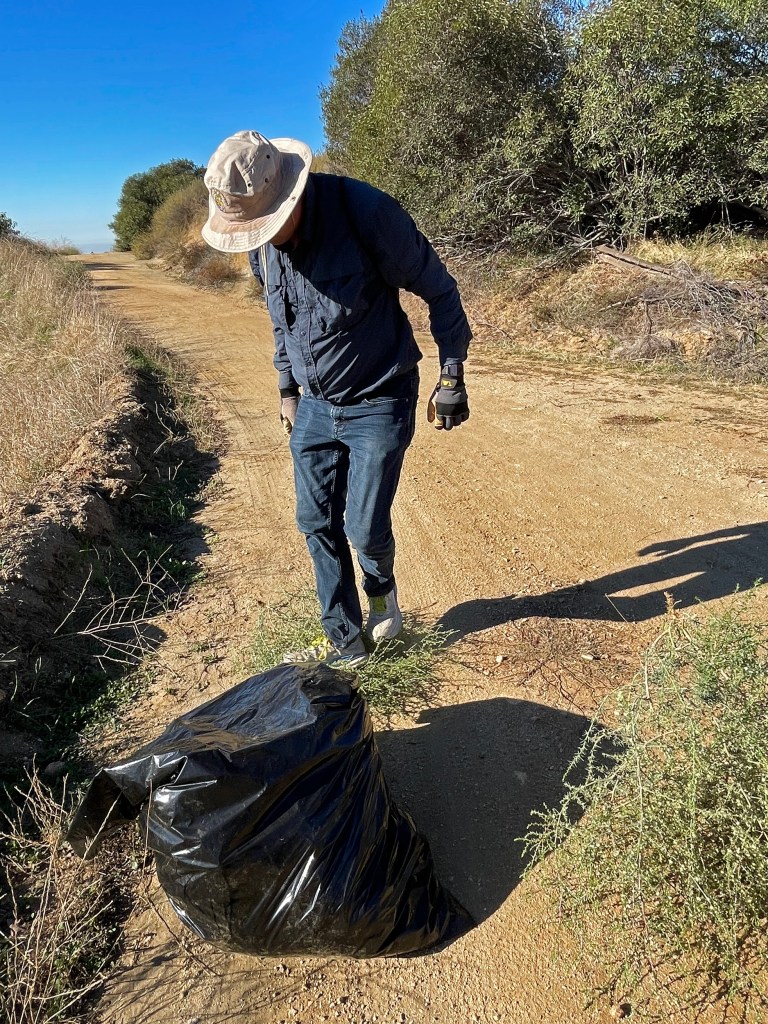
Enjoy some photos:

 Friends of the Claremont Hills Wilderness Park