We’re back! Second Saturdays have resumed

The City of Claremont has lifted the restrictions that prevented the Friends from holding Second Saturday events in the Park. We had a “soft open” with a few volunteers on July 10, when we were visited by Claremont Mayor Jennifer Stark, and a regular Second Saturday event on August 14.

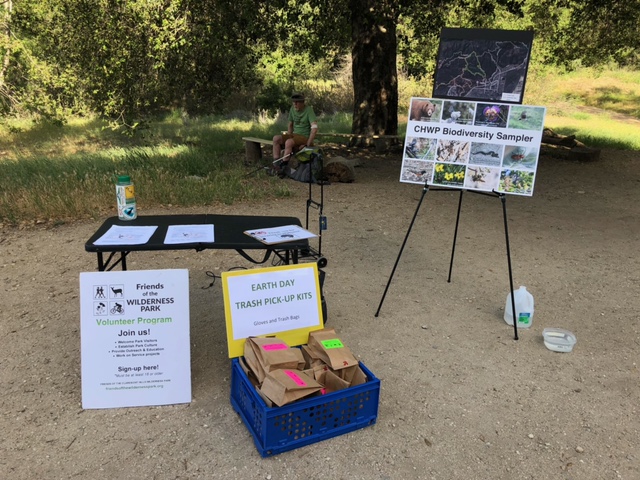
The second Saturday volunteer program is a collaboration of the Friends of the Wilderness Park, CHWP Rangers, and City Staff.  On the second Saturday of each month, for four hours Friends’ volunteers:

  • Answer questions about the Park.
  • Provide directions (with a map that visitors can photograph).
  • Remind visitors to take adequate water for themselves and their dogs.
  • Give water and/or refillable water bottles (or a drink from a dog bowl) to those in need.
  • Remind visitors to keep dogs on leashes and not play music out loud. 
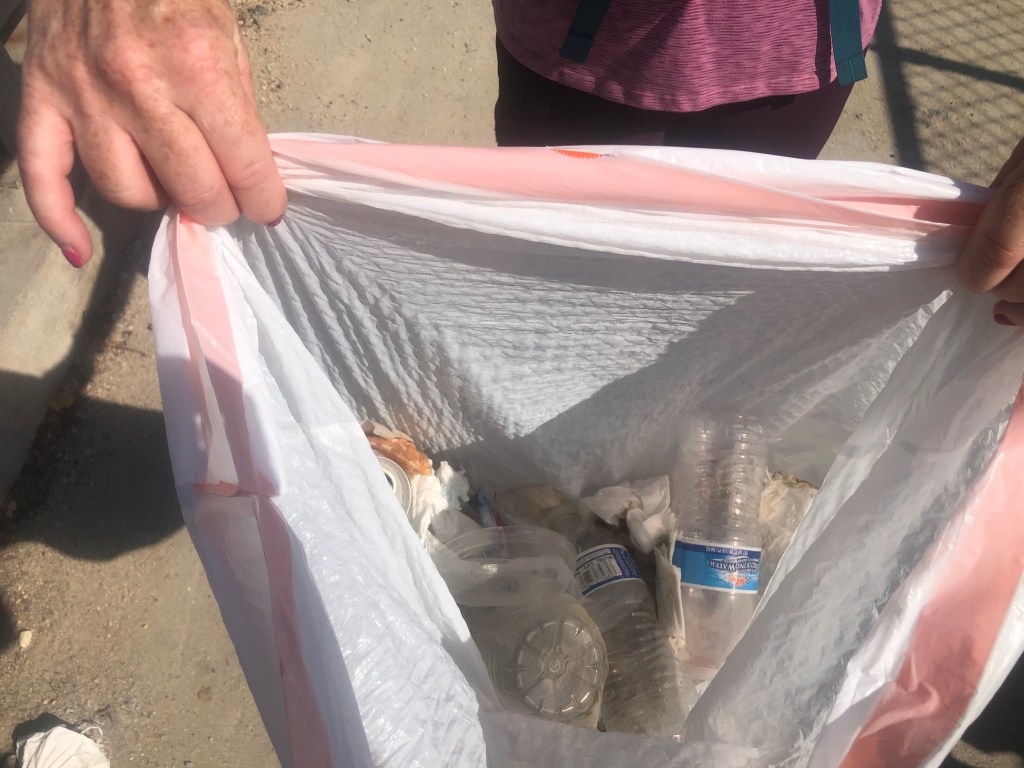
  • Hike the loop, picking up trash and answering questions along the way.

We are always looking for volunteers for Second Saturday, so if you’re interested, please contact our Volunteer Coordinator, Vicki Salazar at vickisalazar01@gmail.com, or if you’re in the Park, stop by and say, “Hi”.

A bagful of trash collected by some of the the Friends on the August 14 Second Saturday. ©Greg Glass.

Help with Monarch conservation July 23 – August 1!

If you’d like to help with Monarch conservation, and you like to take photographs, please consider participating in the upcoming 5th International Annual Monarch Monitoring Blitz!

How does this work and how does it help Monarchs?

From the Media Release:

“For 10 days, the Blitz invites people across North America to look for milkweed plants and survey them for monarch eggs, caterpillars, chrysalises and butterflies. This information will help researchers identify priority areas for monarch conservation actions….

“The yearly snapshots of monarch and milkweed abundance help us better understand the dynamic between the summer generations and their breeding habitat. Since both monarchs and milkweed are found across North America during the time of the Blitz, we absolutely need the public’s help during this special week.”

How can I participate?

  1. First, go to the Western Monarch Milkweed Mapper website, and register for an account.
  2. Head out with your camera to look for milkweeds and Monarchs!  In the Wilderness Park, all the milkweed plants we are aware of are in the Johnson’s Pasture area, but you might see Monarchs elsewhere.
  3. If you see a Monarch or milkweed, take a photo, login to the Western Monarch Milkweed Mapper website, upload your photo, fill out the form (location, habitat description, stage or Monarch, milkweed species), and submit. That’s it!
    Tutorial-Image3

Some possibly useful information:

Monarch Identification:

For information about identifying Monarchs and their life stages (egg, larva, pupa, adult), check out this excellent Video on Monarch Identification from the Monarch Joint Venture.

danaus_plexippus_cat-062821-jm09.27.25-1
A fifth instar Monarch caterpillar on Woollypod Milkweed (Asclepias eriocarpa) together with a Longhorn Milkweed Beetle (Tetraopes basalis). ©Jon Moore.

Milkweed Species:
There are only two milkweed species in the Wilderness Park:

    • Narrowleaf Milkweed (Asclepias fascicularis)
      As you might guess from the name, it has narrow leaves, which are green and not fuzzy
    • Woolypod Milkweed (Asclepias eriocarpa)
      This milkweed has very large, fuzzy gray leaves

Narrowleaf Milkweed (Asclepias fascicularis) in Johnson’s Pasture. ©Nancy Hamlett.


Woollypod Milkweed (Asclepias eriocarpa) in Johnson’s Pasture. ©Nancy Hamlett.

If you have any questions, please contact us at info@friendsofthewildernesspark.org. We will be looking forward to your milkweed and Monarch observations!

Northern Harrier Hunting in Johnson’s Pasture

In the winter, you can often see Northern Harriers in the Wilderness Park. Unlike other hawks that hunt from on high, these unusual hawks fly very low over the ground, looking and listening for rodents. They have a disk-shaped face looks and functions much like an owl’s, with stiff facial feathers helping to direct sound to the ears, and they rely on hearing as well as vision to capture prey.

Last week one was hunting in Johnson’s Pasture and stayed in the same area for more than an hour, allowing your intrepid photographer to snap enough photos that some of them came our more or less in focus.

Here you can see how close they fly to the ground at times.

The Northern Harrier flying very low over the side of Johnson’s Pasture Road. ©Nancy Hamlett.

In the Wilderness Park, you can often look down on them and spot the distinctive white patch on the rump.

The Northern Harrier flying low showing its white rump patch while a cyclist rides by on Webb Canyon Road. ©Nancy Hamlett.

This Northern Harrier must have been a female, as the females are brown above (males are grayish) and pale with brown streaks below.

Another view of the Northern Harrier hunting showing the brown color above and the distinctive white rump patch. ©Nancy Hamlett.

If you see one of these in the Park, take a few minutes to watch it. They’re awesome! They’re not likely to be here too much longer for this year. Although some are sighted in LA County throughout the year, most of the Northern Harriers migrate to the very northern US and Canada for the summer.

For more information on Northern Harriers, check out All About Birds.

Spring has sprung!

Even though it’s only February, it’s already spring in Southern California. Green leaves and shoots are popping up all over, and the earliest flowering plants are starting to bloom.

One of the first to flower is the White-flowering Currant (Ribes indecorum), which is making a show all over the Wilderness Park just now. This large deciduous shrub of chaparral and sage scrub has lobed, wrinkled bright green leaves that are slightly sticky and clusters of small white flowers in loose, dangling clusters, which are visited by bees, butterflies, and hummingbirds. The photo of the flowering plant above was taken last week in Johnson’s Pasture.

In late spring and summer, the White-flowering Currant has blue-purple berries, which are attractive to birds.

Berries of Ribes indecorum.
A bright green, wrinkled leaf of Ribes indecorum
The undersides of the leaves of Ribes indecorum have hairs that give them a whitish appearance.

Lots more plants will be flowering soon, so keep your eyes out! If you like looking at and photographing plants and animals in the Park, please think about posting to iNaturalist. Anything you post in the Park will be collected by our Biota of the Claremont Hills Wilderness Park project.

P.S. We have no idea why the specific name is indecorum. This plant’s decorum seems fine to us!