Today’s question was posed to us by recent Park visitor.
The question is:
I saw this snake on the trail, but it wasn’t a rattlesnake … or was it? It didn’t rattle.
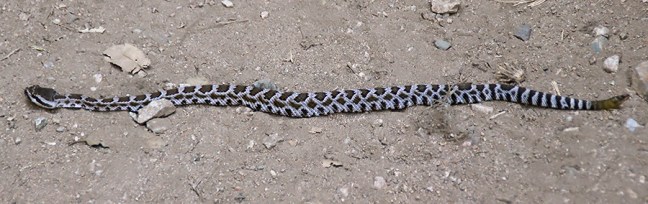
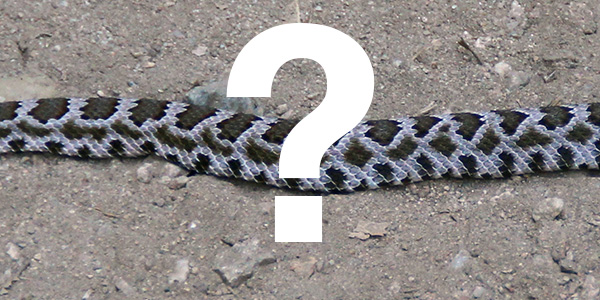
We checked it out! Here is a photo of the snake in question:
And the answer is:
Definitely a rattlesnake!
It’s a young Southern Pacific Rattlesnake (Crotalus oreganus helleri), which is the only rattlesnake that occurs in our area. The only other snake in the Wilderness Park with a similar pattern is the San Diego Gophersnake (Pituophis catenifer annectens). Here’s how to tell them apart (image and information adapted from California Herps’ “Living with Rattlesnakes”):
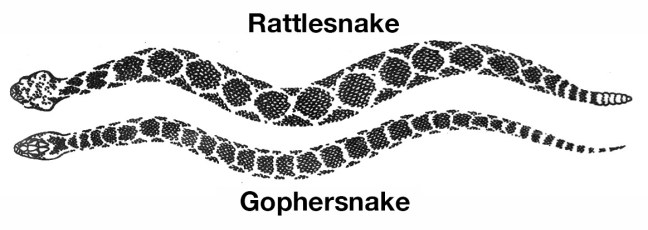
Rattlesnake:
• Triangular head, definitely larger than neck
• Thick, dull, non-glossy body
• Blunt tail with one or more rattles
Gohpersnake:
• Head only slightly larger than neck
• Slender, glossy body
• Pointed tail
You can see that the subject of our question meets all three criteria for rattlesnakes!
Close examination of this one’s tail reveals two rattle segments in addition to the terminal button (which it had when it was born). Young rattlesnakes grow quickly, and they add a new rattle segment each time they shed their skin, so this one is probably less than a year old.
As evidenced by the snake that prompted the question, rattlesnakes do not always rattle. Again, from “Living with Rattlesnakes”: “They will often remain silent when they sense a threat, using their cryptic color and pattern to blend into their surroundings to hide from the threat. In this situation making noise risks advertising their presence. They also use their natural camouflage to hunt by sitting still and not rattling, trying to remain invisible as they wait for a warm-blooded prey animal to pass close enough for the snake to strike it,” although they do often rattle loudly to warn potential enemies of their presence.
Rattlesnakes are the only venomous snakes in our area. (Although some people might call them as “poisonous”, they’re not – poisonous snakes are technically ones that make you sick if your eat them.) Although rattlesnake bites can be extremely dangerous, rattlesnakes are not aggressive or vicious. They do not strike or bite without provocation. If rattlesnakes are given some space and time to escape to a safe place, they will usually just crawl away and avoid confrontation.
What should you do if you meet a rattlesnake in the Wilderness Park:
- Leave it alone!
- Give the snake a wide berth and walk by; if you can’t pass comfortably at a distance, retrace your steps.
- Don’t even think about picking it up or poking it with a stick!
- Don’t yell at the snake or throw rocks at them. They have poor hearing, so they won’t hear you shouting and hitting one with a rock will just irritate or injure the snake.
Be proactive to minimize rattlesnake encounters:
- Be alert! Rattlesnake behavior changes with the weather. When they want to warm up, they may bask right in the middle of the trail.
- Stick to the trails. (You’re supposed to do this, anyway!) During the day, snakes may hide in tall grass, weeds or heavy underbrush.
- Check out stumps or logs before sitting down.
- Don’t hike alone. Always have someone with you who can assist in an emergency.
- Leash your dog. (This is already required in the Wilderness Park!) Dogs are at increased risk of being bitten due to holding their nose to the ground while investigating the outdoors.
What should you do if you are bitten?
- Stay calm but act quickly.
- Remove watches, rings, etc., which may constrict swelling.
- Call the Claremont Police Department emergency number (909) 626-1296.
- Transport the victim to the nearest medical facility.
- Don’t apply a tourniquet, pack the bit in ice, cut the wound with a knife or razor, or use your mouth to suck out the venom!
More information:
What’s your question? If you have a question about the Wilderness Park, please email us at info@friendsofthewildernesspark.org.

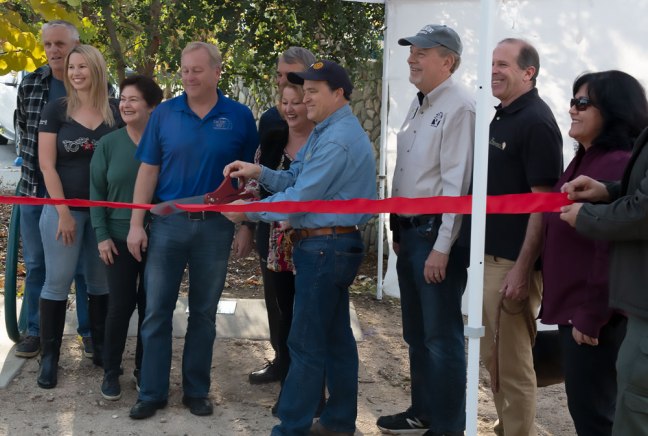
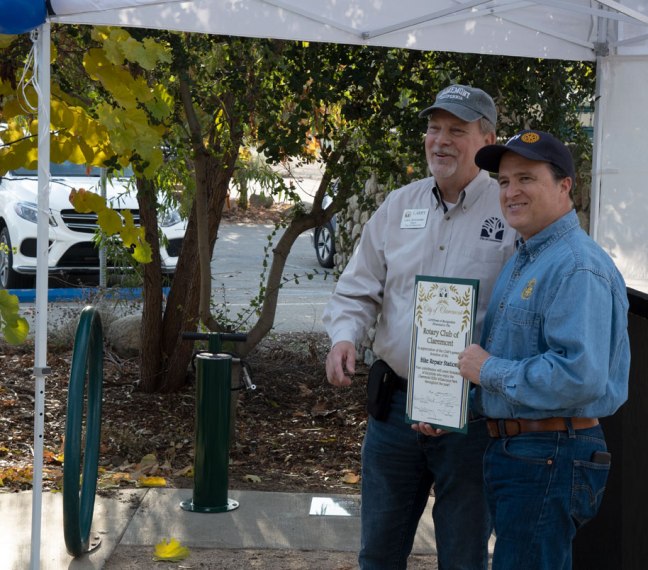
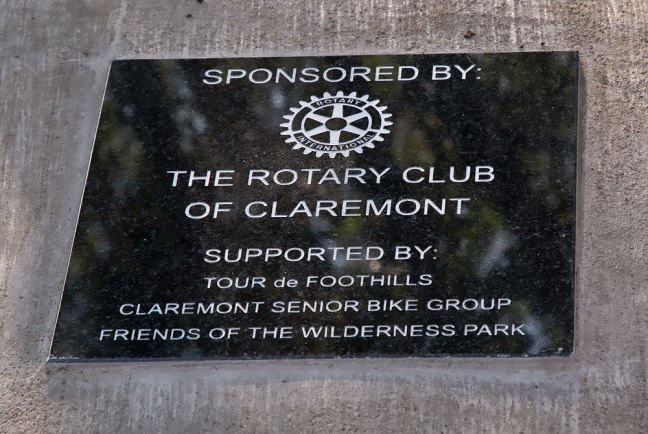
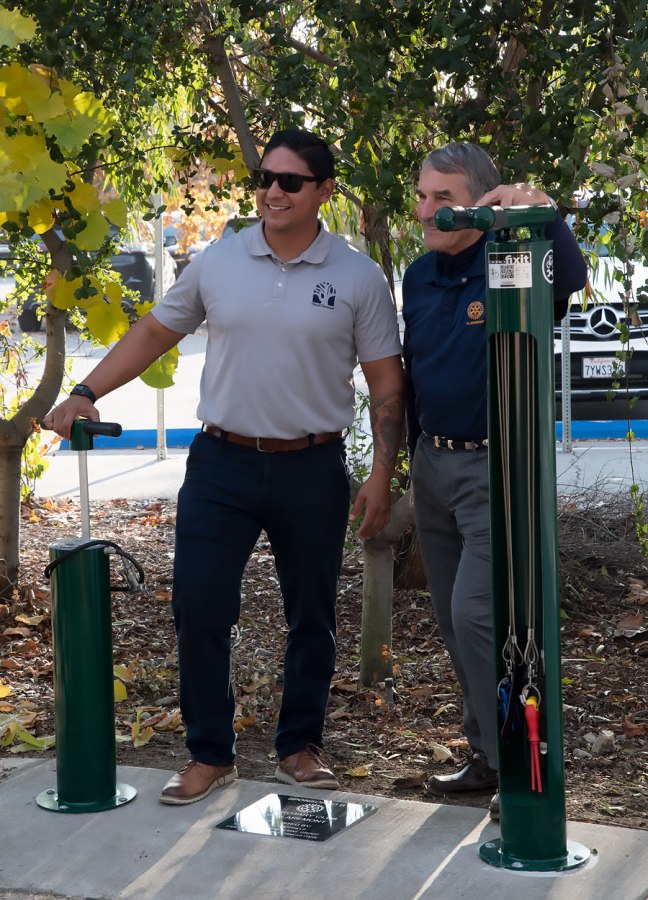 Fred Cervantes, Parks & Sports Coordinator for the City of Claremont (left) stands next to the repair station with Rotarian and Park Ranger Tom Shelley, who was instrumental in obtaining the donation.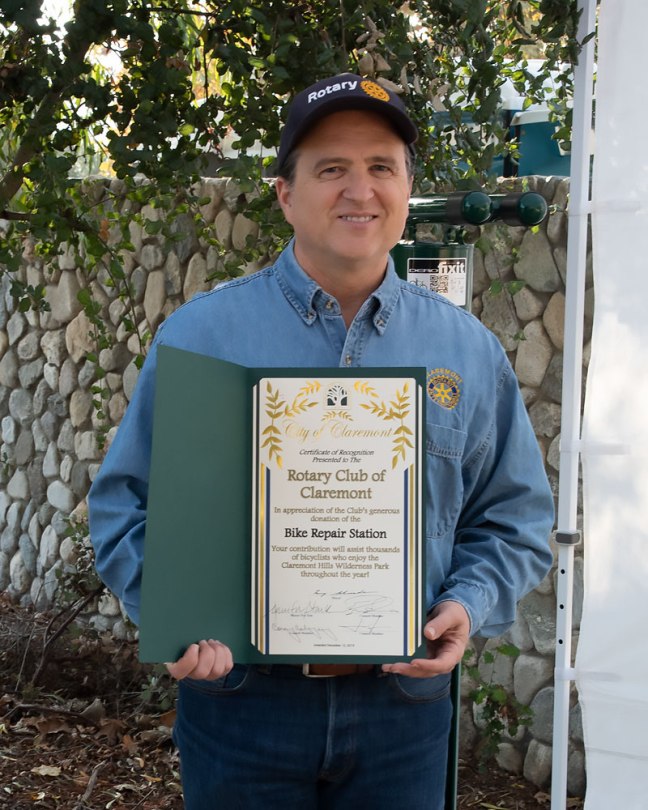
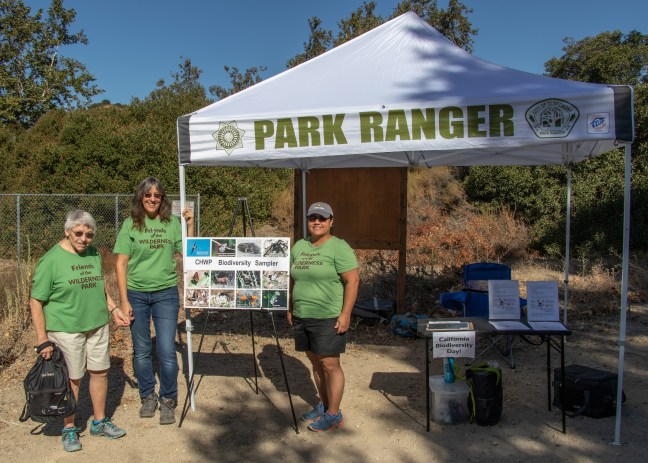
 The Lorquin’s Admiral is thought to be a Batesian mimic of the California Sister
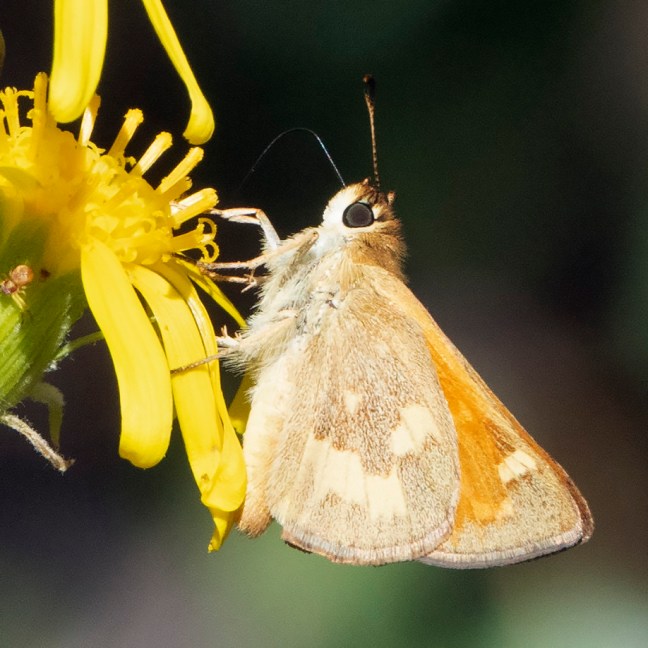 The Woodland Skippers were all over Evey Canyon on Sunday. Douglas’s Threadleaf Ragwort blooms later than most and attracts a lot of bees and butterflies in late summer and early fall.
 This was a two-fer! Both the Stenopogon robber fly and the Western Yellowjacket were new additions to our project. Isn’t the robber fly a fearsome-looking creature?
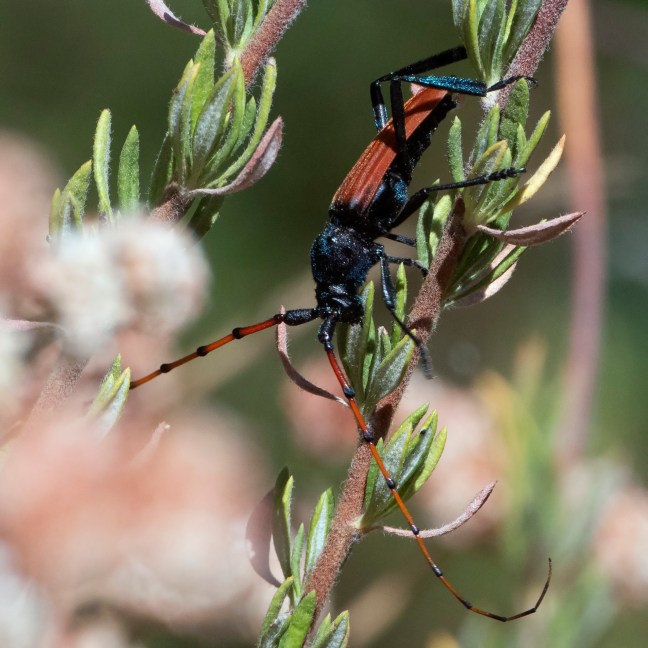 With its blue iridescent body and coppery elytra, this large, colorful beetle is an amazing tarantula hawk mimic.
 There were quite a few of these on the broom in Evey Canyon – four on this plant alone. Who knew there was a moth that used broom as a host plant? We say, “Go caterpillars! Eat broom!”
 Friends of the Claremont Hills Wilderness Park