Northern Harrier Hunting in Johnson’s Pasture

In the winter, you can often see Northern Harriers in the Wilderness Park. Unlike other hawks that hunt from on high, these unusual hawks fly very low over the ground, looking and listening for rodents. They have a disk-shaped face looks and functions much like an owl’s, with stiff facial feathers helping to direct sound to the ears, and they rely on hearing as well as vision to capture prey.

Last week one was hunting in Johnson’s Pasture and stayed in the same area for more than an hour, allowing your intrepid photographer to snap enough photos that some of them came our more or less in focus.

Here you can see how close they fly to the ground at times.

The Northern Harrier flying very low over the side of Johnson’s Pasture Road. ©Nancy Hamlett.

In the Wilderness Park, you can often look down on them and spot the distinctive white patch on the rump.

The Northern Harrier flying low showing its white rump patch while a cyclist rides by on Webb Canyon Road. ©Nancy Hamlett.

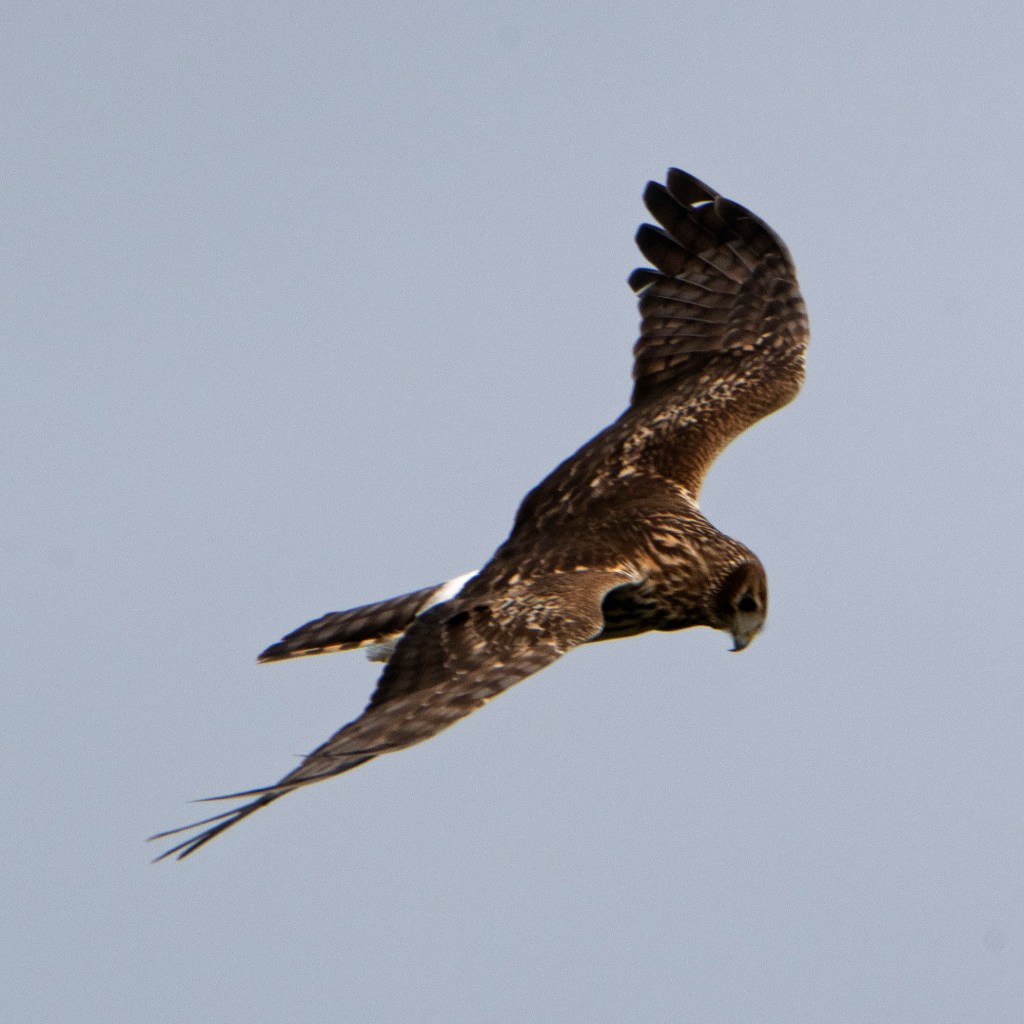
This Northern Harrier must have been a female, as the females are brown above (males are grayish) and pale with brown streaks below.

Another view of the Northern Harrier hunting showing the brown color above and the distinctive white rump patch. ©Nancy Hamlett.

If you see one of these in the Park, take a few minutes to watch it. They’re awesome! They’re not likely to be here too much longer for this year. Although some are sighted in LA County throughout the year, most of the Northern Harriers migrate to the very northern US and Canada for the summer.

For more information on Northern Harriers, check out All About Birds.

Spring has sprung!

Even though it’s only February, it’s already spring in Southern California. Green leaves and shoots are popping up all over, and the earliest flowering plants are starting to bloom.

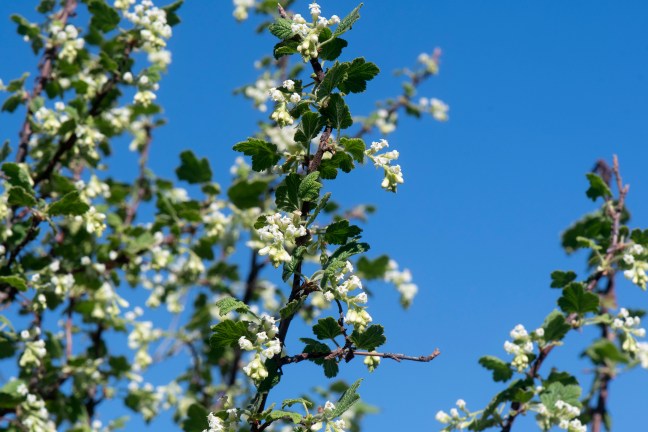
One of the first to flower is the White-flowering Currant (Ribes indecorum), which is making a show all over the Wilderness Park just now. This large deciduous shrub of chaparral and sage scrub has lobed, wrinkled bright green leaves that are slightly sticky and clusters of small white flowers in loose, dangling clusters, which are visited by bees, butterflies, and hummingbirds. The photo of the flowering plant above was taken last week in Johnson’s Pasture.

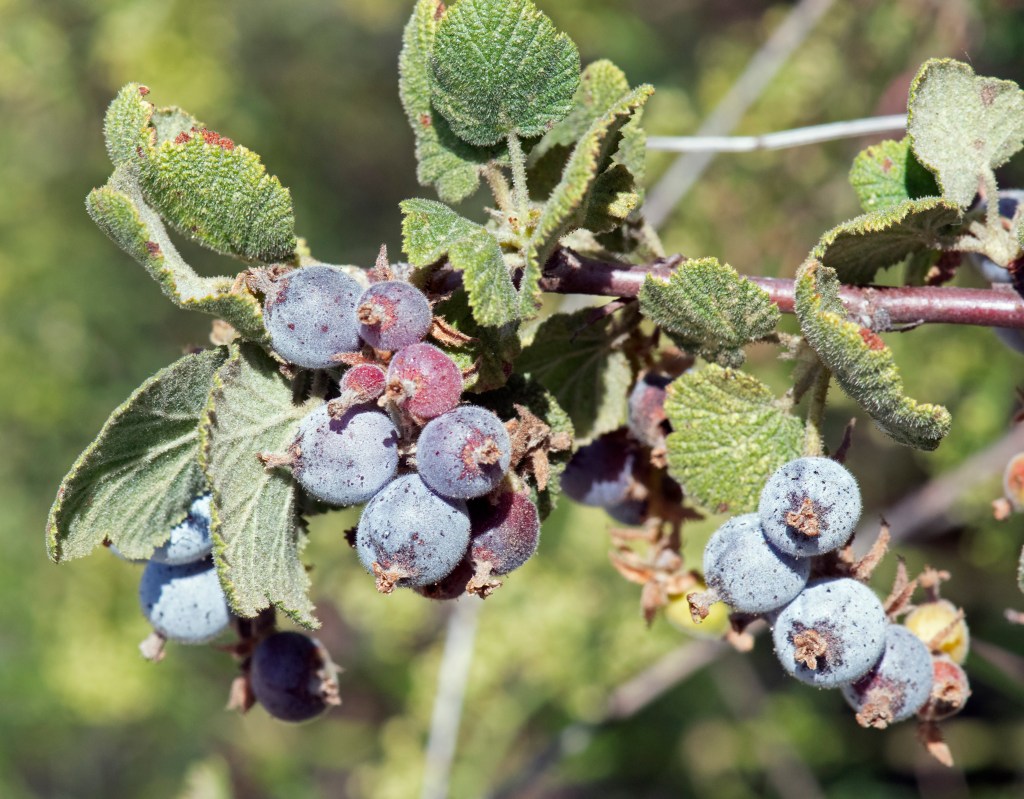
In late spring and summer, the White-flowering Currant has blue-purple berries, which are attractive to birds.

Berries of Ribes indecorum.
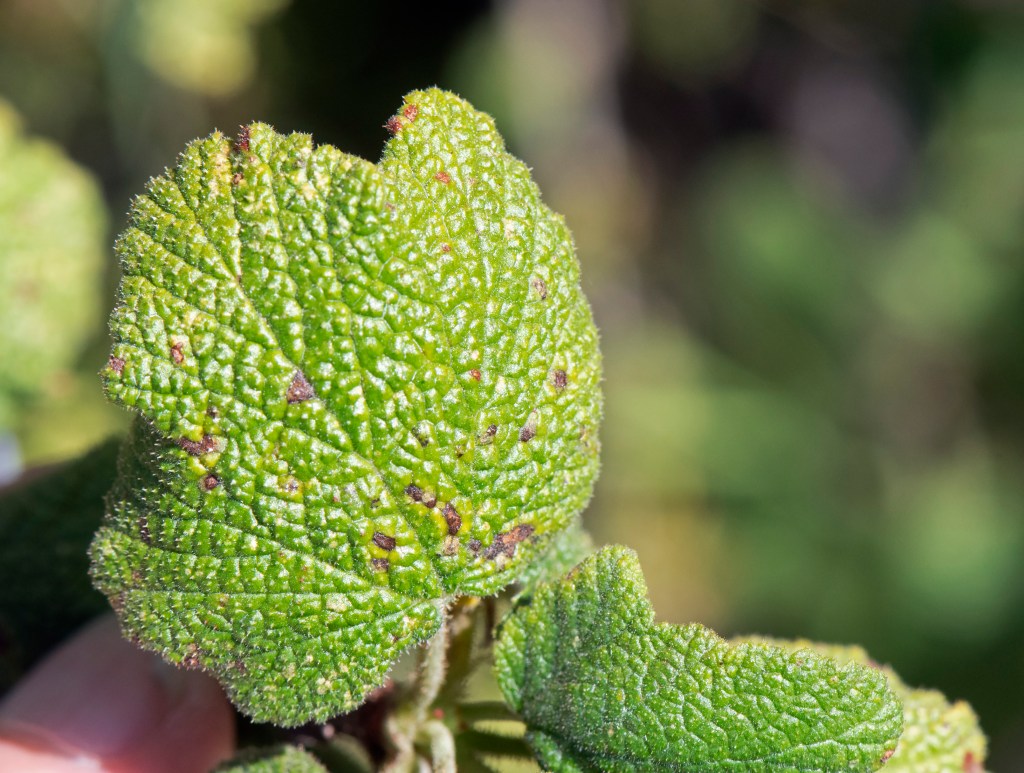
A bright green, wrinkled leaf of Ribes indecorum
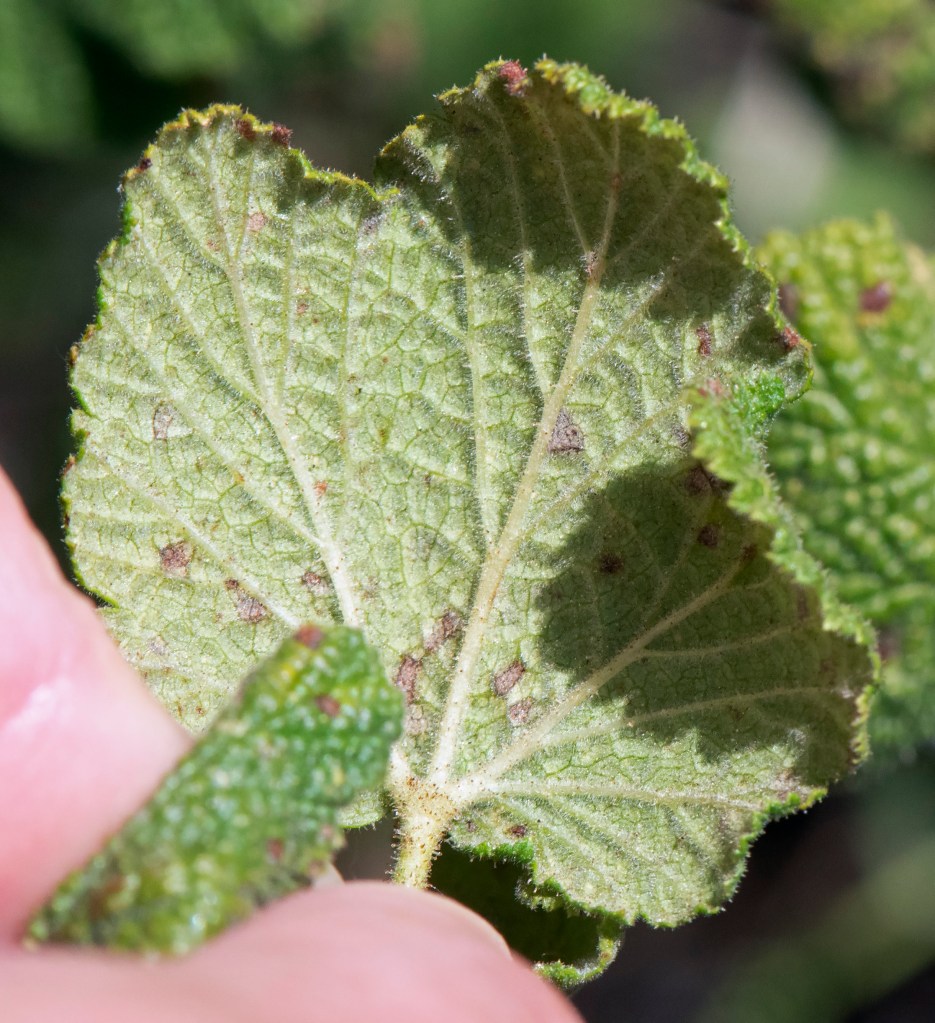
The undersides of the leaves of Ribes indecorum have hairs that give them a whitish appearance.

Lots more plants will be flowering soon, so keep your eyes out! If you like looking at and photographing plants and animals in the Park, please think about posting to iNaturalist. Anything you post in the Park will be collected by our Biota of the Claremont Hills Wilderness Park project.

P.S. We have no idea why the specific name is indecorum. This plant’s decorum seems fine to us!

Endangered Species Day May 15!

May 15, 2020 is Endangered Species Day, and we’re highlighting Endangered Species in the Wilderness Park – Nevin’s Barberry (Berberis nevinii), which is listed as Endangered by both the State of California and US Fish & Wildlife, and Crotch’s Bumble Bee, which is a candidate for Endangered Species listing in the state of California.

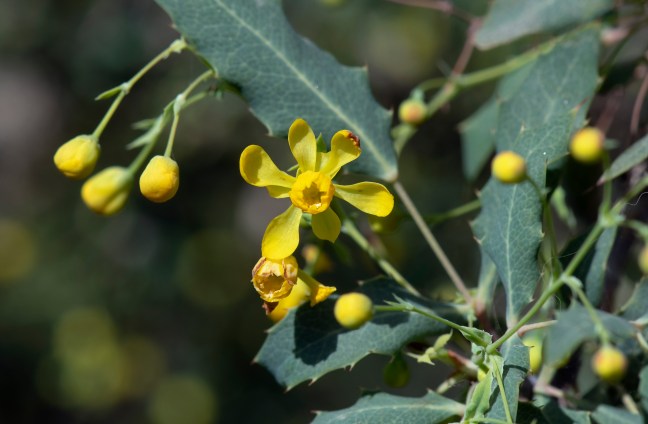
Nevin’s Barberry (shown above) is an evergreen shrub with prickly leaves bearing bright yellow, sweetly scented flowers in the early spring, followed by red-orange berries. Many bees and wasps love its flowers.

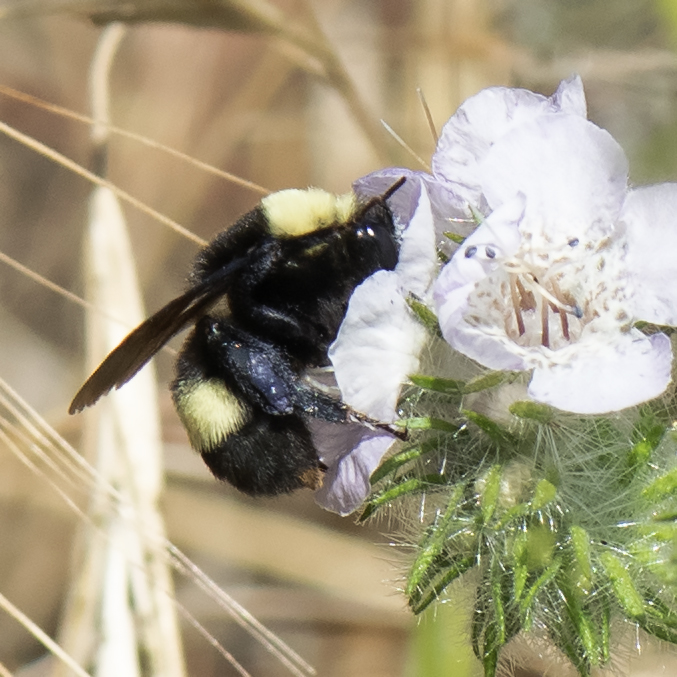
Crotch’s Bumble Bee (Bombus crotchii) could be confused with the much more common Yellow-faced Bumble Bee (Bombus vosnesenskii), but it’s face is black, and the yellow stripe on the abdomen is wider and closer to the thorax.

Bombus_crotchii-051419-3113

If you are out in the Wilderness Park, and spot any rare or endangered species, please let us know by emailing info@friendsofthewildernesspark.org. If you are an iNaturalist user, please post any photos to iNaturalist, but do also email us. Because iNaturalist obscures the location, the sighting won’t appear in our Wilderness Park project (https://www.inaturalist.org/projects/biota-of-the-claremont-hills-wilderness-park).

For more information on Endangered Species Day and what you can do to help Endangered Species, see:

https://www.fws.gov/endangered/esday/index.html

California Biodiversity Day at the Wilderness Park

Thanks to everyone who participated in California Biodiversity Day at the Wilderness Park, and especially the Rangers, who set it all up!  On Saturday and Sunday, Sept. 7 and 8, forty-eight new observations were reported to our iNaturalist project.  Thirty-seven different species were reported, including 13 species not previously reported to iNaturalist for the Park.  Here are a few of our favorites.  The ones with * are new species for our iNaturalist project.

*Lorquin’s Admiral (Limenitis lorquini):
Limenitis_lorquini-090819-5389The Lorquin’s Admiral is thought to be a Batesian mimic of the California Sister, which is reportedly much less palatable to predators.

Woodland Skipper (Ochlodes sylvanoides) nectaring on *Douglas’s Threadleaf Ragwort (Senecio flaccidus var. douglasii):Ochlodes_sylvanoides-090819-5517The Woodland Skippers were all over Evey Canyon on Sunday.  Douglas’s Threadleaf Ragwort blooms later than most and attracts a lot of bees and butterflies in late summer and early fall.

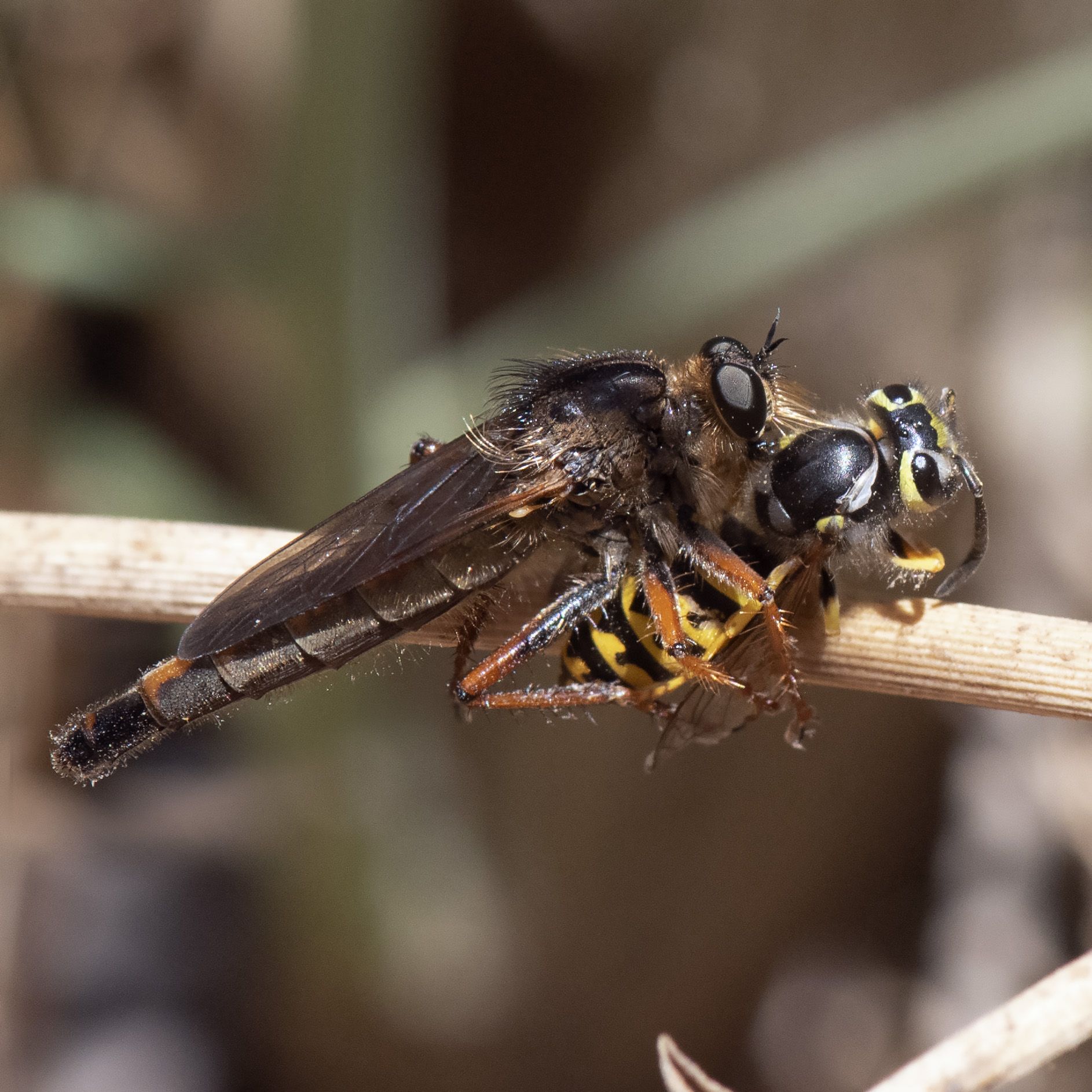
A robber fly (*Stenopogon sp.) with a *Western Yellowjacket (Vespula pensylvanica) prey:Robber_fly-090819-5435This was a two-fer!  Both the Stenopogon robber fly and the Western Yellowjacket were new additions to our project. Isn’t the robber fly a fearsome-looking creature?

A long-horned beetle (*Tragidion annulatum):Tragidion_annulatum-090819-5486With its blue iridescent body and coppery elytra, this large, colorful beetle is an amazing tarantula hawk mimic.

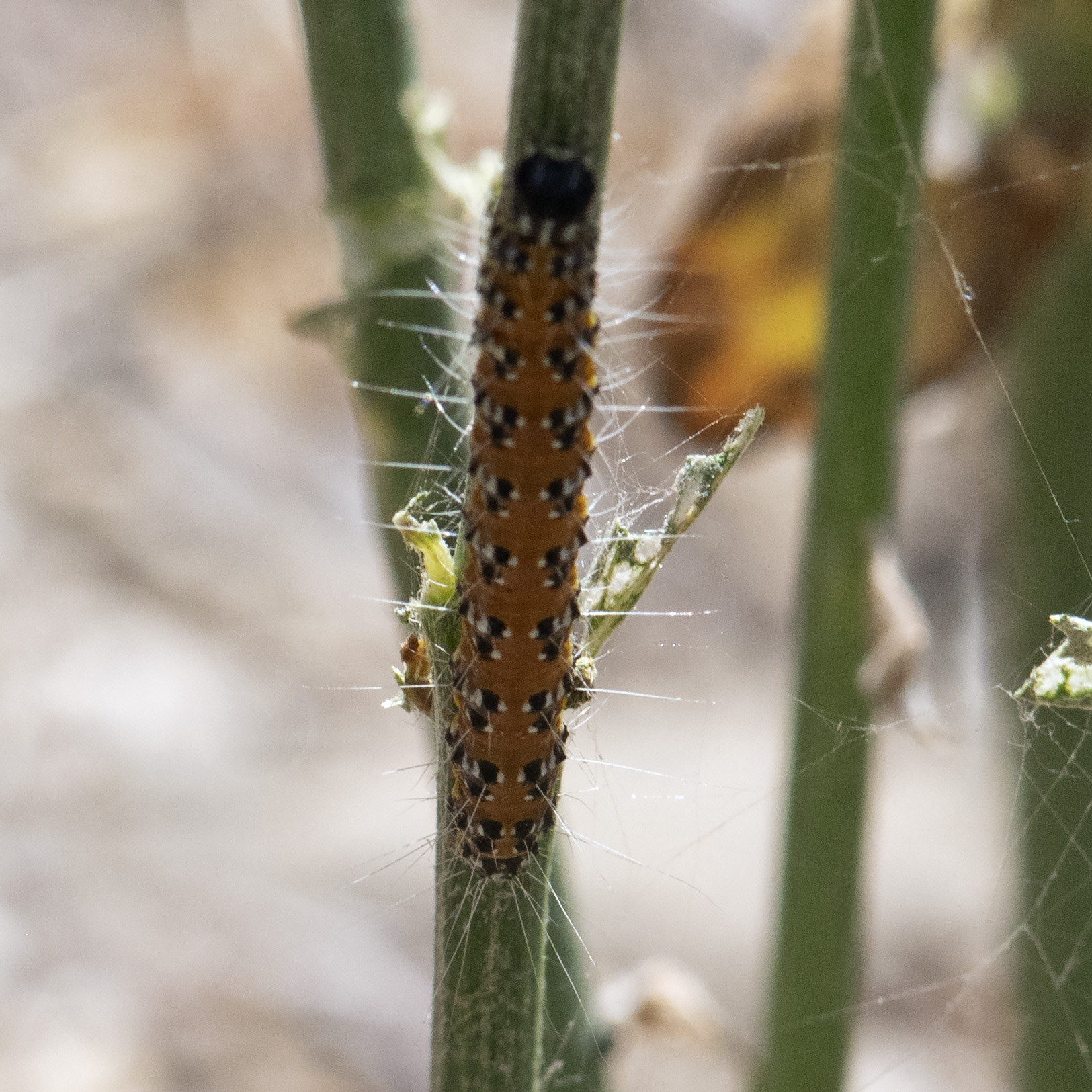
*Genista Broom Moth (Uresiphita reversalis) caterpillar on Spanish Broom (Spartium junceum):Uresiphita_reversalis-090819-5573There were quite a few of these on the broom in Evey Canyon – four on this plant alone. Who knew there was a moth that used broom as a host plant?  We say, “Go caterpillars!  Eat broom!”

If you made observations in the Park but didn’t report them, don’t worry!  You can submit them any time, and they will still be counted both for the Park and for the statewide California Biodiversity Day project.

Celebrate Biodiversity Day at the Wilderness Park!

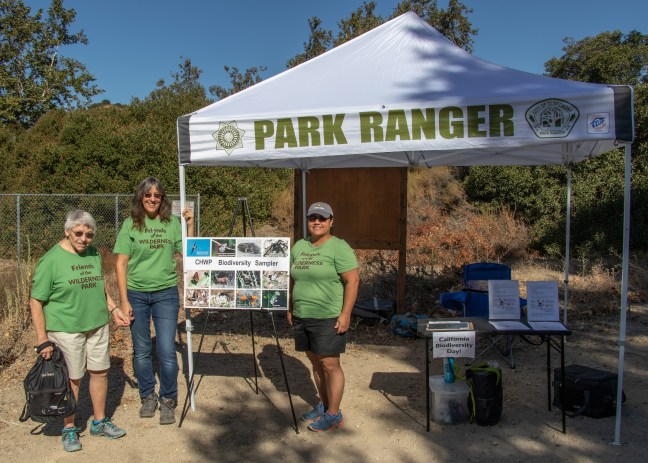
September 7, 2019 marks the first official celebration of California Biodiversity Day, an annual event created last year to celebrate the state’s exceptional biodiversity and encourage actions to protect it.  The city of Claremont Park Rangers together with the Friends of the Wilderness Park will be observing California Biodiversity Day 2019 at the Claremont Hills Wilderness Park.

Join us this Saturday, September 7th from 6:30am to 9:30am and learn how to use your phone to contribute to science and the Wilderness Park with iNaturalist!  Just look for the canopy near the North Mills entrance for more information!

Already an iNaturalist user?

Please come and help show others to use the iNaturalist app!

New to iNaturalist?

iNaturalist is an online social network of people sharing biodiversity information to help each other learn about nature. iNaturalist is a collaboration between National Geographic and the California Academy of Sciences.  Anyone can participate in iNaturalist!

Before arriving on Saturday please:

  1. Go to iNaturalist.org and create a free account. You should see “SIGN UP” featured prominently on the homepage.   Otherwise, there’s a “Sign Up” link in the top right corner.
  2. On your smart phone, go to the Apple Store or the Google Play store and download the iNaturalist app.

Once you’ve signed up, you can enter observations from either your phone or computer.  The iNaturalist site has a really good explanation here:

https://www.inaturalist.org/pages/getting+started

The page also has links to video tutorials.

The Wilderness Park Biota Project:
iNat_project_header

The Friends of the Wilderness Park have created an iNaturalist project for documenting the plants and animals of the Wilderness Park.  If you make iNaturalist observations in the Park, they will automatically be collected and added to the project!

If you’d like to check out the CHWP project and see what’s already been reported, just go here:

https://www.inaturalist.org/projects/biotaoftheclaremonthillswildernesspark

A few tips for best practices:

  • If feasible, crop your photos to feature the subject, especially if it’s not clear whether the subject is the bird or the tree, for example.
  • Include a little description. For one thing, you can use the description to say what’s the subject.  But you can also note any additional details, interesting behavior, type of habitat, odors, etc. that may not be obvious from the photo.
  • Give the most specific ID you can, even if it’s not to the species level. For instance, “insect”, “snake”, or even “plant” or “animal” is better than just having “unknown”.
  • Give a little info about yourself in your profile — it increases your credibility.