

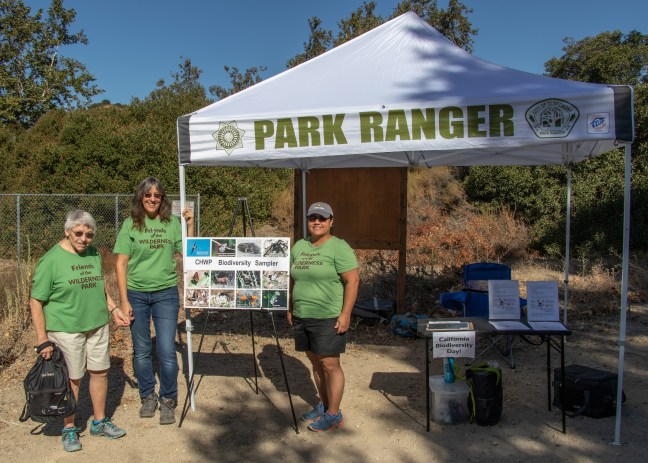
Thanks to everyone who participated in California Biodiversity Day at the Wilderness Park on September 11, and thanks to the Park Rangers, who set up their canopy for us! During the official California Biodiversity Days, Sept. 4 – 12, seventeen new observations were reported to our iNaturalist project, including 14 taxa, of which 11 were identified to species.
Here are a few that were observed:
Telegraph Weed (Heterotheca grandiflora)
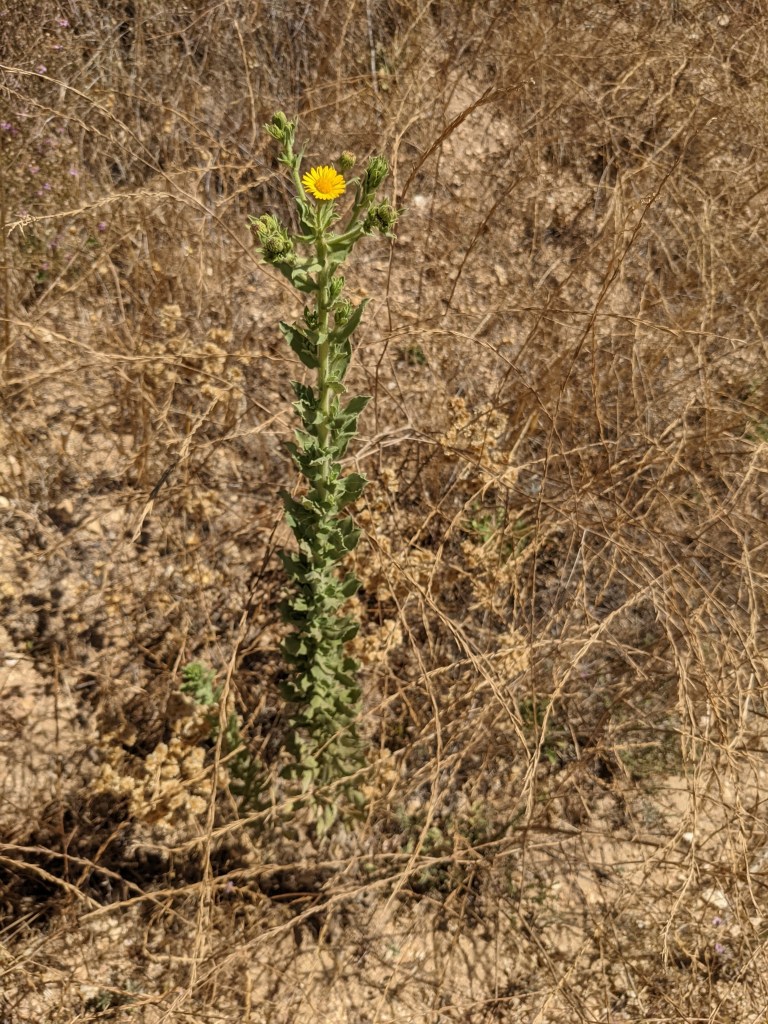
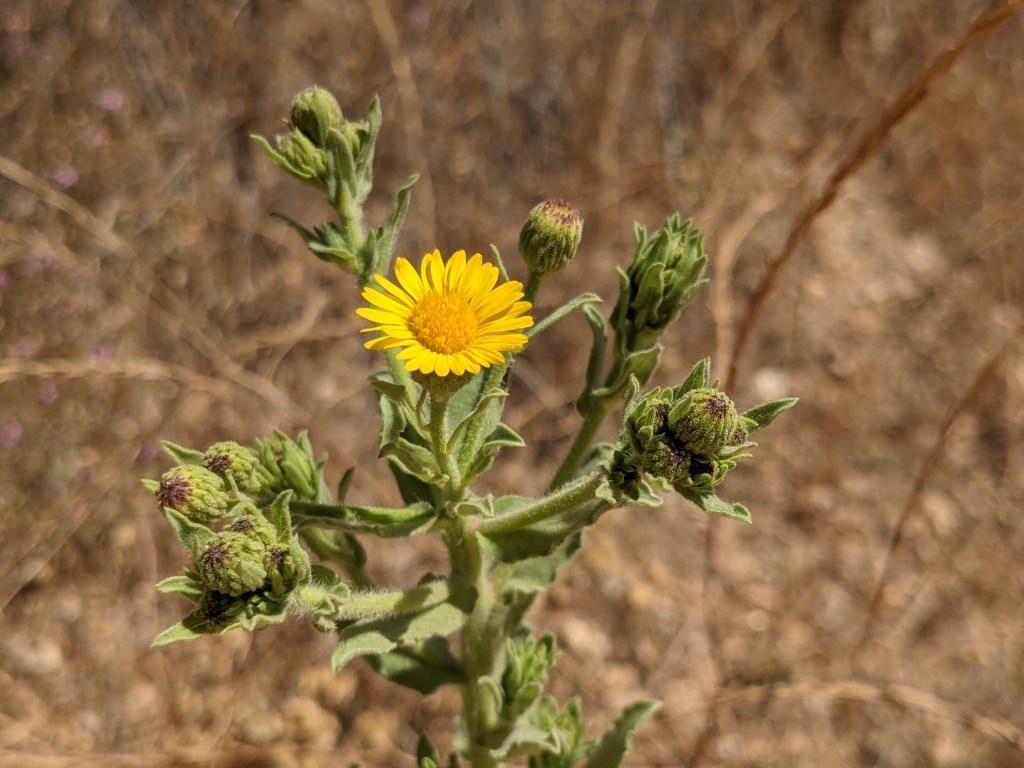
Telegraph Weed was the species most commonly reported in the Park during California Biodiversity Days. Its bright yellow flowers on tall stems (sometimes more than 5 ft) are a common sight in the Park in late summer and fall. It is a pioneer native species, growing along roadsides and in other disturbed sites.
The origin of the common name is hazy. Some think it’s because the tall, slim stalks stick up like telegraph poles. Others have suggested it’s because it readily colonized the areas disturbed by telegraph pole installation.
Threadleaf Groundsel (Senecio flaccidus)
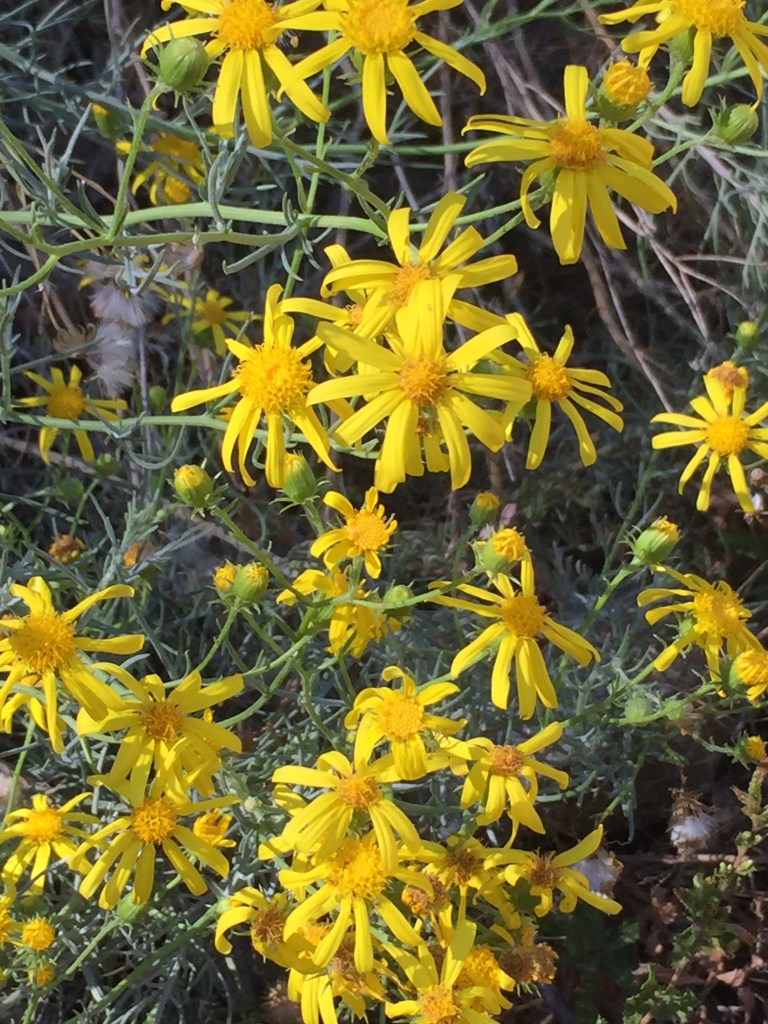
Another late summer and fall bloomer, Threadleaf Groundsel’s bright yellow daisy-like flowers rise about the mass of pale gray-green threadlike leaves that give the shrub its common name. Many different bees like to visit Threadleaf Groundsel.
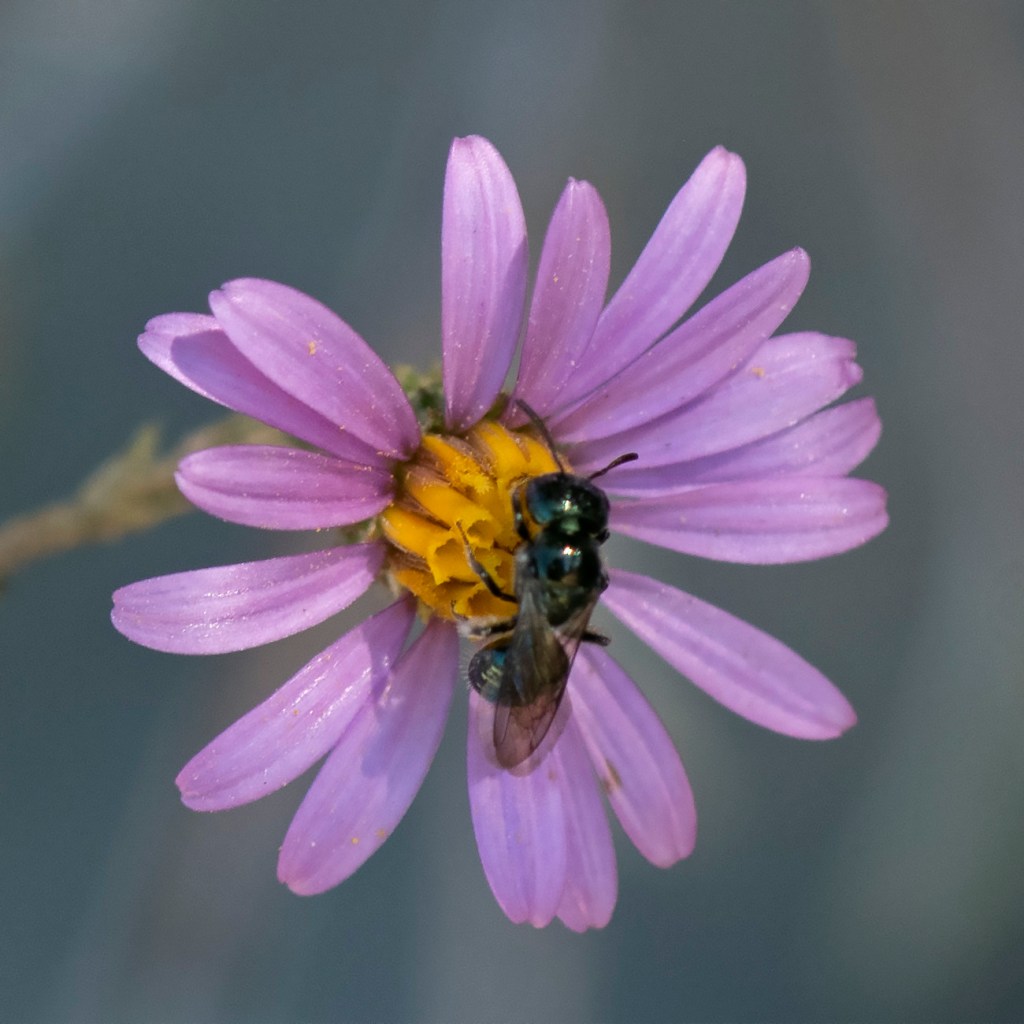
Small Carpenter Bee (Ceratina sp.)
© Nancy Hamlett · some rights reserved
Small Carpenter Bees are related to the large carpenter bees you may have seen around your house, but they are much too small to be able to bore into wood to make their nests; instead they make their nests in the pithy stems of plants.
Woodland Skipper (Ochlodes sylvanoides)
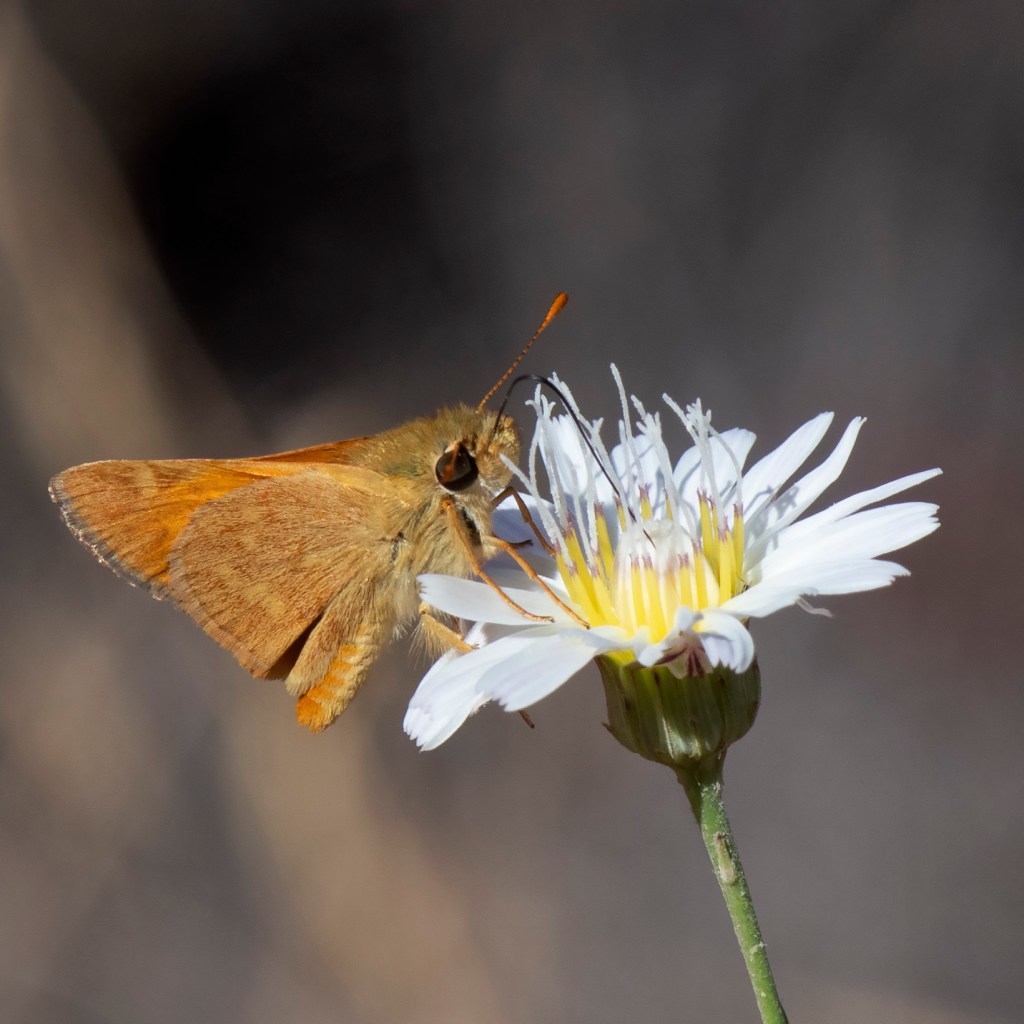
© Nancy Hamlett · some rights reserved
Woodland Skippers are common in chaparral in the late summer and fall. The larval host plants are grasses, but the adults nectar on a wide variety of plants.
You can see all of the Biodiversity Day observations here.
 The Lorquin’s Admiral is thought to be a Batesian mimic of the California Sister
 The Woodland Skippers were all over Evey Canyon on Sunday. Douglas’s Threadleaf Ragwort blooms later than most and attracts a lot of bees and butterflies in late summer and early fall.
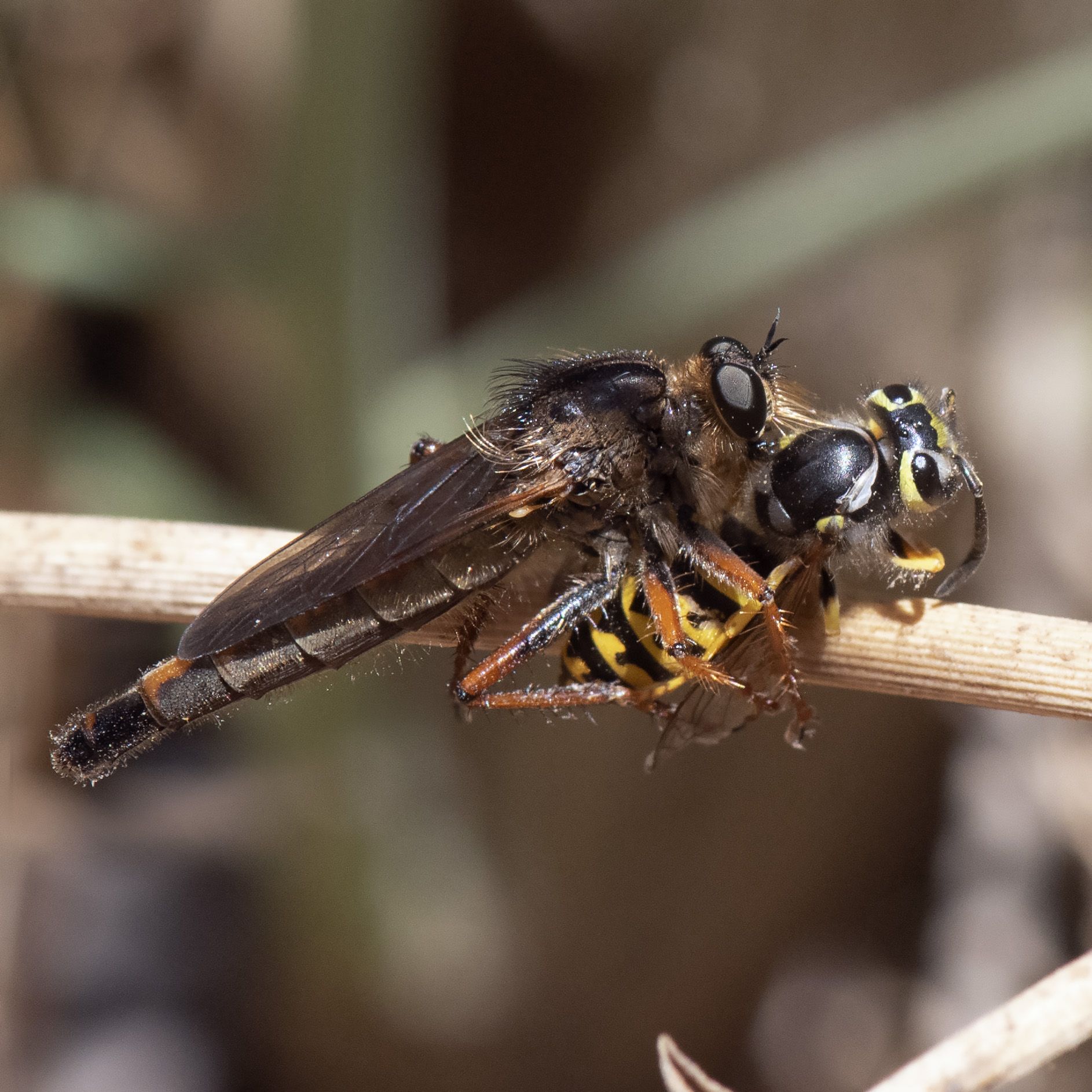 This was a two-fer! Both the Stenopogon robber fly and the Western Yellowjacket were new additions to our project. Isn’t the robber fly a fearsome-looking creature?
 With its blue iridescent body and coppery elytra, this large, colorful beetle is an amazing tarantula hawk mimic.
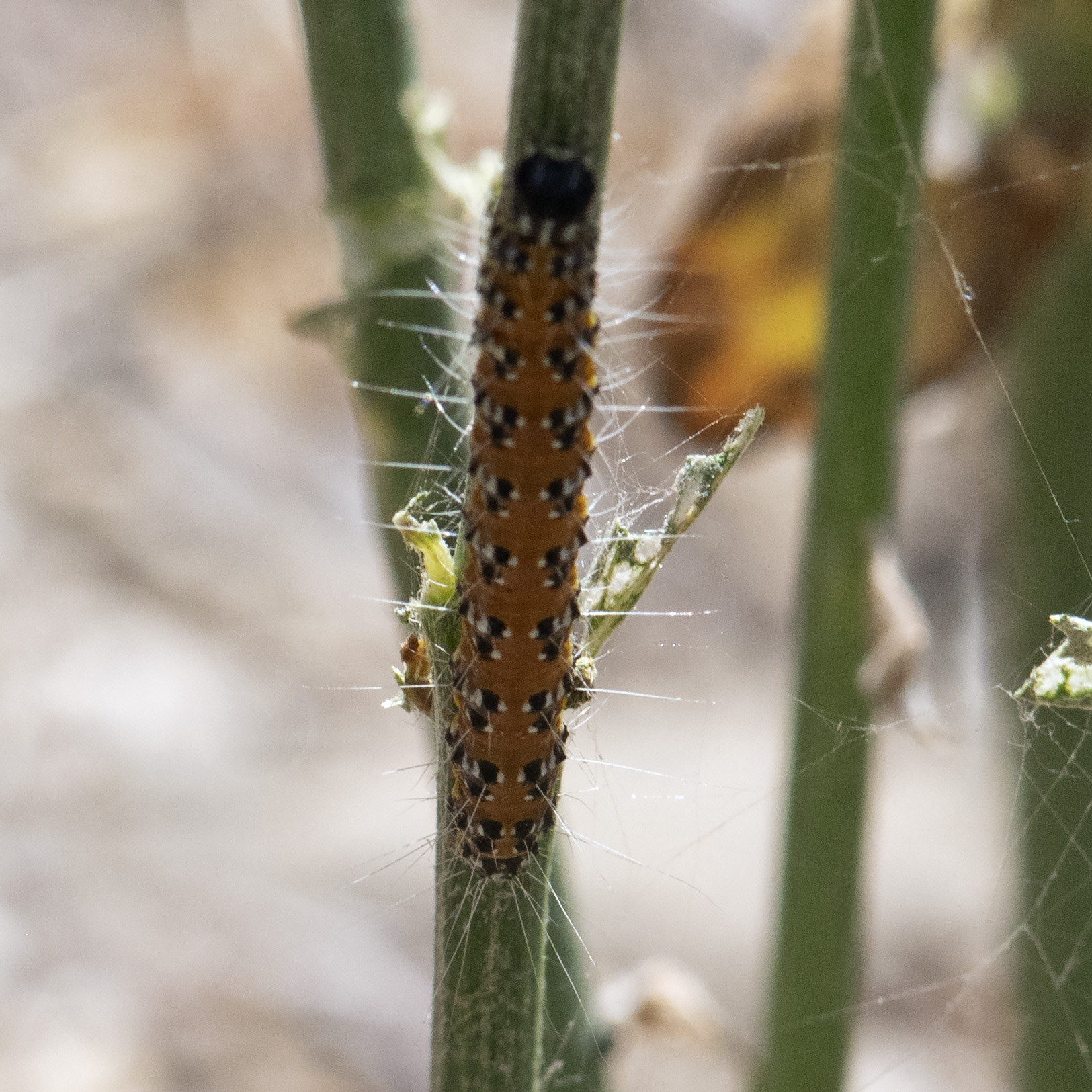 There were quite a few of these on the broom in Evey Canyon – four on this plant alone. Who knew there was a moth that used broom as a host plant? We say, “Go caterpillars! Eat broom!”


 Friends of the Claremont Hills Wilderness Park
